Magic card rarities explained, common to mythic
How to read a Magic card's rarity from its set symbol, how often mythic rares turn up, and the extra sheets and numbered cards that sit outside the usual four.
By the Rip.fan Editorial Team.
Published 7 min read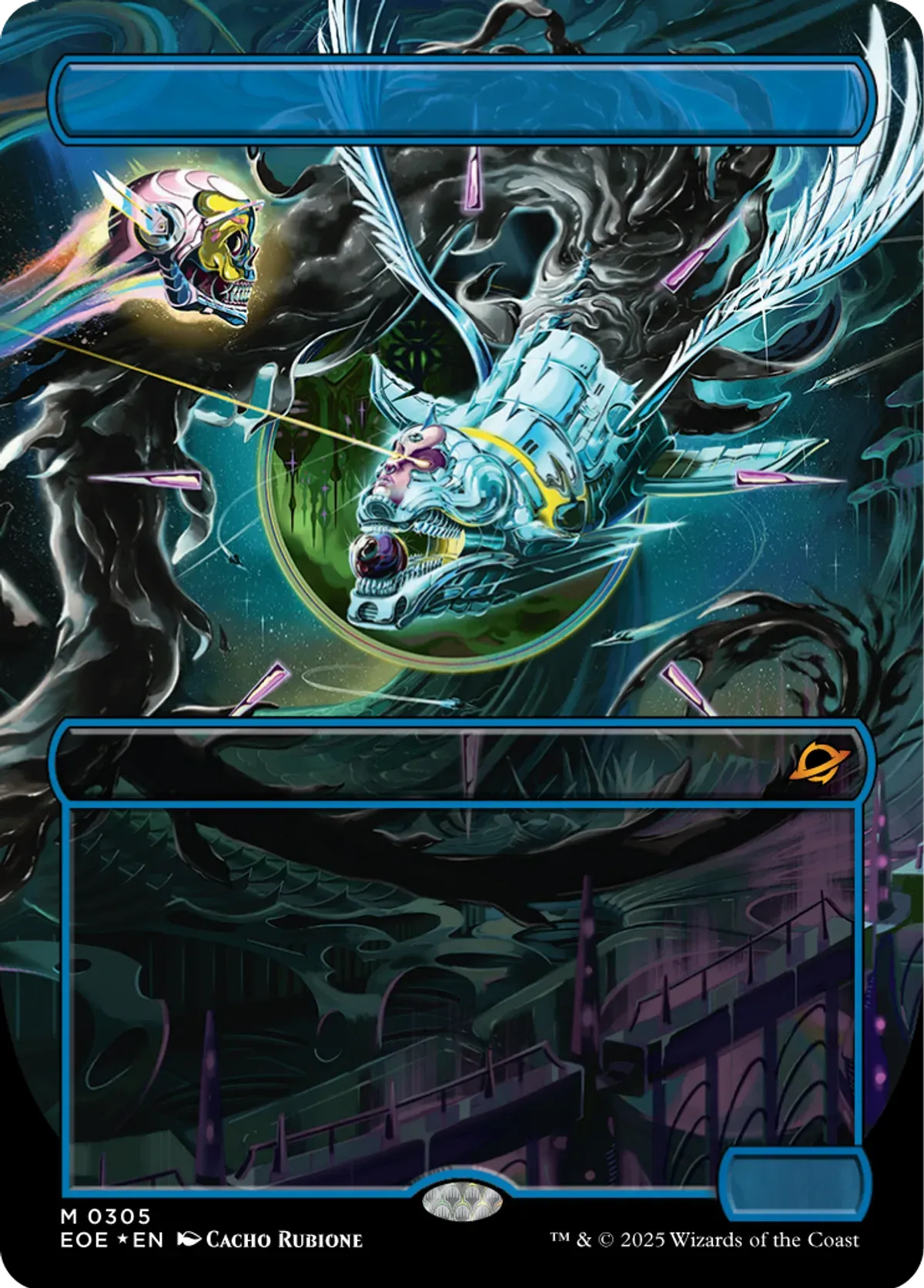
Magic sorts the cards of a main set into four rarities: common, uncommon, rare and mythic rare. On modern cards the color of the set symbol tells you which one you hold. Older cards need a lookup, and some printings sit outside the four altogether: extra sheets with rarities of their own, serialized cards and headliners made in runs of about 500.
How do you tell a Magic card’s rarity?
Look at the set symbol, the small icon on the right side of the card, below the art. Its color marks the rarity. TCGplayer and MTG Rocks describe the colors a little differently:
| Rarity | Symbol color |
|---|---|
| Common | Black |
| Uncommon | Silver |
| Rare | Gold |
| Mythic rare | Deep orange |
The uncommon color is where they part. TCGplayer calls it silver and MTG Rocks bluish, so set the card beside an uncommon you already know before you decide. Only MTG Rocks describes the common’s symbol, as black.
Two catches apply. First, the colors came late. Every set symbol was black and white, regardless of rarity, through the Stronghold expansion, so the color on an older card tells you nothing. Second, many rares and mythic rares carry a security stamp at the bottom, added around Core Set 2015, but not every rare carries one and some promotional commons and uncommons do. The symbol is the better guide on a modern card. For anything older, check the printing in Wizards’ own card database, which prints the rarity beside each printing’s collector number. Our glossary entry on the card set explains what a set is.
When did the mythic rare start, and how rare is it?
Wizards introduced the new mythic rare for Shards of Alara, a set released later that year, in its Making Magic column of June 2, 2008. Here is the new set’s makeup:
| Rarity in Shards of Alara | Cards |
|---|---|
| Common | 101 |
| Uncommon | 60 |
| Rare | 53 |
| Mythic rare | 15 |
The set has 249 cards. By Rip.fan’s arithmetic, the four rarities make 229, and the other 20 are basic lands, which fall under the Land rarity with five names: Forest, Island, Mountain, Plains and Swamp.
The column also set out each pack: ten commons, three uncommons, one basic land and one rare, with a mythic rare in the rare’s place in roughly one in eight packs. Wizards added that one in eight could make mythic rares seem seven times as rare as rares, but that they were in fact twice as rare, because of how the print sheet was laid out and because a set holds more rares than mythics. Mythic rares were printed in foil too.
Mythic rares were introduced in the Alara block, with Shards of Alara in 2008.
How often does each rarity turn up in packs today?
The pack has changed since 2008. TCGplayer’s 2021 guide described the Draft Booster of that time much as Wizards did in 2008: ten commons, three uncommons and a rare in every pack, with a mythic rare in its place in about one in eight. It added that Set Boosters could hold up to three rares, so mythics came up more often there.
Wizards’ current product guide gives ranges by pack type and no mythic figure. It still lists the main booster under that pack’s older name; Wizards’ October 5, 2026 announcement says it is now just called the Booster Pack.
- The main booster (Booster Pack): at least one card of rare or higher in every pack.
- Collector Boosters: 5 to 6 cards of rare or higher.
- Set Boosters: 1 to 4.
- Draft Boosters: at least one.
On October 5, 2026, Wizards announced that from Nauctis, the first set of 2027, foil commons and uncommons leave the Booster Pack, any foil in one will be a rare or mythic rare, and foil rares and mythic rares will turn up more often. It gave no figure for that last change. Our guide to Magic Collector Boosters sets the pack types side by side, and the main booster and Collector Booster entries explain the terms.
What sits outside the four rarities?
Several kinds of printing don’t fit the common to mythic ladder. Each one is worth recognizing before you price a card.
Special rarity
All 122 cards of Time Spiral Timeshifted, a 2006 set, carry a rarity called Special, which is shown beside the collector number.
Extra sheets
An extra sheet is a small set packed alongside a main one, with its own set code and its own rarities. The Mystical Archive of Secrets of Strixhaven is a clear case. It has the code SOA and 65 cards: 25 uncommons, 25 rares and 15 mythic rares. Every Secrets of Strixhaven main booster holds a Mystical Archive spell, and Collector Boosters add Japanese-language Mystical Archive cards in silver scroll foil.
An extra sheet printing can carry a different rarity from the same card elsewhere. Giant Growth is a common in Foundations and in Marvel Super Heroes, but an uncommon in the Mystical Archive. Other extra sets have their own rarities too, among them the Edge of Eternities extra sheet (EOS, 90 cards) and Special Guests (SPG, 164 cards), where most card names are mythic rare.
Numbered cards
Some recent sets carry serialized cards, made in a stated run. There are 500 serialized Mox Jasper cards in Tarkir: Dragonstorm Collector Boosters, and 500 serialized Emeritus of Ideation cards in Secrets of Strixhaven Collector Boosters. Both are printed in English only and turn up in Collector Boosters of any language. The ordinary versions are mechanically identical. Our guide to how serial-numbered sports cards work explains how a stamped number reads, and the serial-numbered entry sums it up.
Headliners
The Hobbit added a headliner: a Gleaming Gold foil Smaug the Magnificent. Around 500 were printed, all in English, for Collector Boosters of any language.
Treatments are not rarities
Borderless, showcase and extended-art cards are versions, not rarities. Wizards presents them as special features of Collector Boosters, and groups print treatments such as foil-etched cards and neon ink, alternate artwork and special frames under the heading Booster Fun. One card can come in several versions at the same rarity: Mox Jasper has three printings in Tarkir: Dragonstorm, numbered 246, 325 and 419, and all three are mythic rare. The collector number tells them apart, and each version sells on its own. Our glossary entry on alternate art covers the term, and the sibling guide to Magic foil types covers the finishes.
Does rarity decide a card’s price?
Only roughly. TCGplayer’s guide notes that lower-rarity cards usually carry lower prices because more copies exist, with exceptions, and its seller tools let a store filter prices by rarity for that reason. Rarity tells you how a card was packed. Since the same card can be a common in one set and an uncommon in another, price the printing in your hand. Our guide to checking Magic card prices shows how to name the exact printing first, and the guide to grading Magic, Yu-Gi-Oh! and One Piece cards covers which services take Magic cards.
How do you check a card’s rarity?
- Find the set symbol below the art on the right, and note its color.
- Check the set’s age. If the card is from Stronghold or earlier, ignore the color.
- Look the printing up in Gatherer. Search by set code and collector number. The search syntax also takes a rarity: typing s:ala r:m lists the 15 mythic rares of Shards of Alara, and the letters c, u and r work the same way.
- Check for an extra sheet, a serial number or a special treatment, and price that version on its own.
Our guide to Magic set release dates lists the sets of 2026 and 2027 with their release dates. Other card games mark rarity differently: Yu-Gi-Oh! uses foil, as our guide to Yu-Gi-Oh! rarities explains, and Pokémon prints symbols, as the guide to Pokémon rarity symbols shows. The trading card hub collects the rest.
Frequently asked questions
How many mythic rares does a modern Magic set have?
Tarkir: Dragonstorm, from 2025, has 20 main-set mythic rares beside 60 rares, 100 uncommons and 81 commons.
Do special frames come at every rarity?
In some sets they do. Tarkir: Dragonstorm's showcase draconic frame covers 6 commons, 15 uncommons, 5 rares and 9 mythic rares, while its showcase ghostfire frame is on 10 mythic rares only.
How are serialized Magic cards numbered?
Each copy carries its own number out of the run. In March of the Machine, every Multiverse Legends card has 500 serialized versions, numbered 1 to 500 on double rainbow foil.