Slab packs explained: what is inside one
A slab pack sells one graded card from a published pool. What that card is, how sites show the pool, and how a slab pack differs from other online packs.
By the Rip.fan Editorial Team.
Published Updated 6 min read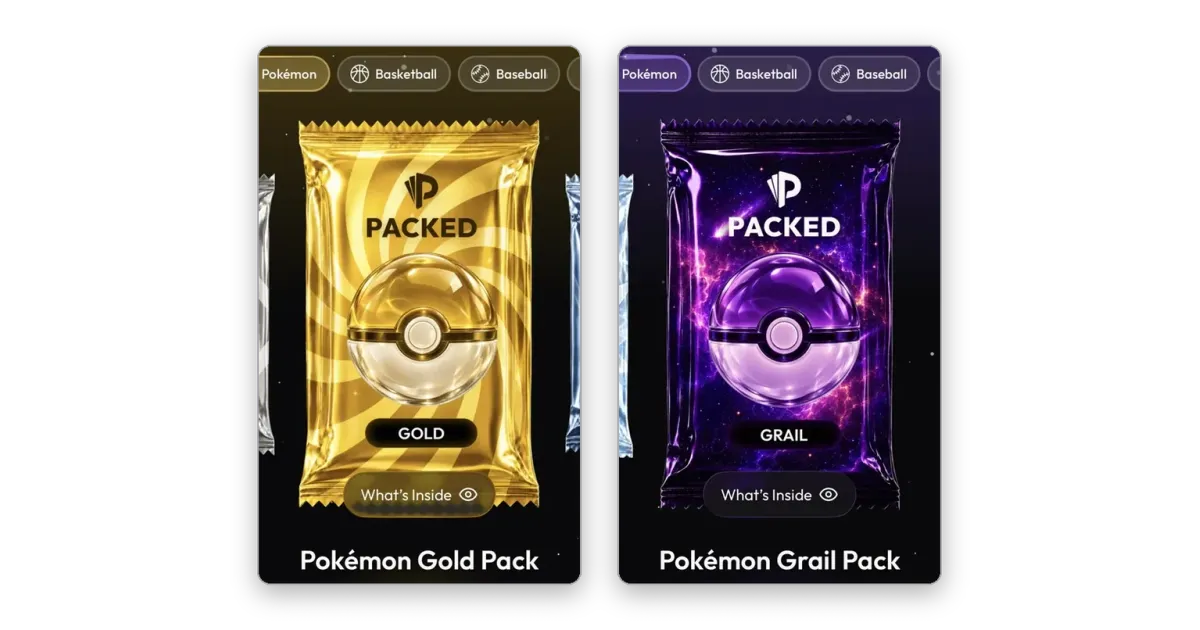
A slab pack is an online pack that holds one graded card. The card is a real one, already sealed in a grading company’s plastic holder (the “slab”) and already sitting in the seller’s storage. You pay a fixed price, the site assigns one card from a pool it lists before you buy, and the reveal shows which one you got.
What is physically in a slab pack?
One graded card. Every Slabz pack holds one graded card, and so does every Glyde pack. Collector Crypt sells packs of graded cards and graded watches, one item to a pack.
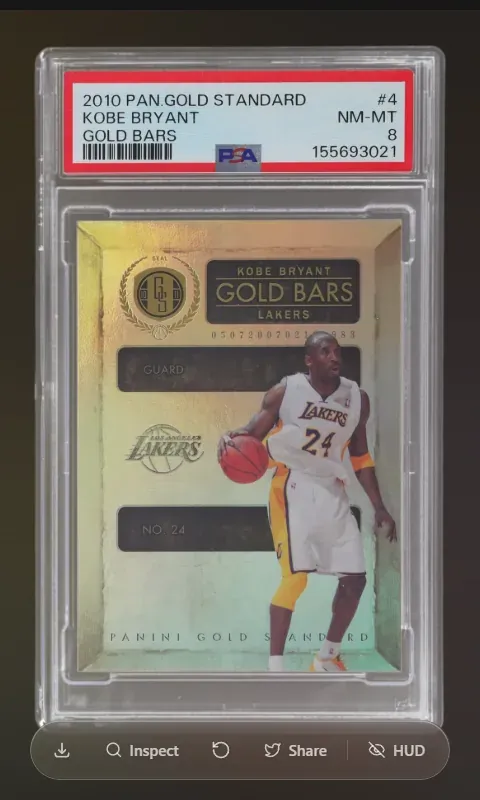
The slab is the sealed holder a grading company puts a card in after it grades it. It protects the card and carries a label that identifies it. That label is what makes a slab pack different from a pack of loose cards: the card’s identity and grade were fixed by a third party before the pack existed.
The word “pack” is borrowed from factory packs, but the product works differently. A factory pack holds cards that came off a print run. A slab pack is closer to a fixed-price purchase of one card from a list of cards that have already been graded and stored.
Who grades the cards?
Outside grading companies, not the rip site.
- Slabz and Gotya sell cards graded by PSA or CGC, and Gotya’s packs can hold raw cards too.
- Shiny sells cards that all come graded in a PSA holder.
- Collector Crypt names the grading company beside each card in a pack’s pool, along with its grade and listed value.
- Rips by Triumph sells graded and raw cards, and the raw ones come as they are.
The grading company’s label is the part you can check yourself. During verification CGC assigns each card a unique ID and barcode, and the card is separated from the paperwork so graders do not see who sent it in. After grading, the card goes into a CGC holder with a label that carries a QR code, the grade, the certification number and a description of the card. CGC then images the card in its holder and makes those images viewable on its website through its Verify CGC Certification tool.
A grade of 10 can mean two things at CGC, and its grading scale separates them. A Pristine 10 gets its own label and needs 50/50 centering. A Gem Mint 10 is a 10 overall that misses one of the Pristine requirements, with centering allowed up to about 55/45. Read the whole label, not only the number.
How do sites show the pool?
Every slab pack draws from a card pool, the list of cards that can still come out. How much of that list you can see differs by site.
Collector Crypt and GrailCart go card by card. Collector Crypt sets out a grid of what each pack can give, highest value first, with each card’s name, grade, grading company and listed value, beside four value ranges and how often each comes up. GrailCart lists every card a pack can contain, each with its card rate.
Other sites group the pool into value ranges:
| Phygitals | Packed | Slabz | |
|---|---|---|---|
| Shown before you buy | Two to five value ranges, how often each comes up, and the trade-in share | Five value bands, from Common to Mythic, each with its dollar range and how often it comes up | Four value tiers, each with how often it comes up and the band of card values it covers |
| Where the values come from | Phygitals credits each card’s market value to Alt | Packed’s own figure, set from recent sales, the grade and how rare the card is | Recent sales on public marketplaces |
First, the values are the site’s own figures. Rips by Triumph sets its values itself, and so does Packed, so set a card’s value beside its recent sales before you act on it.
Second, the pool changes. Gotya’s figures follow the cards still in each pack’s pool, so they can move between one visit and the next. Packed prints its shares as small ranges, since the cards behind each pack come and go. A Phygitals pool changes as packs are opened. A pool you looked at yesterday may not be the pool you are buying from today.
How is a slab pack different from other online packs?
Not every online pack is a slab pack, even on the same site.
| Format | What you get | Graded? | Example, as of October 2026 |
|---|---|---|---|
| Slab pack | One card from a listed pool | Yes, by an outside grader | Slabz and Glyde |
| Set pack | Several raw cards from one set | No | Packs.com |
| Mixed pack | A card, graded or raw | Sometimes | Rips by Triumph, Packed and Phygitals |
Packs.com is the clearest contrast. Its set packs are each built from one set and hold several raw cards, and Packs.com lists every card in that set with how often it comes up. These are packs it builds itself to match a real booster’s card rates, not factory-sealed boosters.
Raw cards can also turn up on sites that sell slabs too, such as Rips by Triumph, Packed and Gotya. A raw card has no label to check, so its condition is the open question. Our guide to card condition grades covers that scale.
What can you do with the card afterward?
Most rip sites give you some of four choices: keep the card in the site’s storage, list it for other collectors, accept the site’s instant trade-in offer, or have it shipped. The clocks differ a lot. Slabz keeps its offer open for 72 hours, and the card then stays in the vault, free to ship home. Packed sells a card back for you after 24 hours in its vault, Rips by Triumph keeps a card for seven days at most, and TiltRips sets no deadline at all. The full set of fees and deadlines is in vault or ship it home?, and the step-by-step purchase flow is in how online pack opening works.
What should you check before buying a slab pack?
- Is the pool listed card by card? A full list of cards tells you more than a set of ranges.
- When were the values set, and by whom? A site’s own figure can drift away from recent sales.
- Which graders are in the pool? You need the grading company’s name to check the cert number later.
- Is every card graded? Some sites mix raw cards with slabs.
- What are the trade-in terms and window? They decide how long you have to choose.
To see which of the sites we list sell packs of the cards you collect, start at card rips. Our ranking of rip sites scores the sites we list, our Slabz review covers a site where every pack holds one graded card, and our Phygitals review covers a site that sells graded and raw cards.
Once a card is in your account, you can compare the site’s figure with recent sales using Rip.fan’s card price lookup, or check comps for the same card and grade elsewhere.
Pack lineups change often, so check the pack page before you buy.
Frequently asked questions
Can you add your own slabs to Phygitals?
Yes. Phygitals takes cards graded by PSA, BGS, SGC or CGC, but no raw cards, and charges no fee to take them in or to store them. A card usually shows in your account 5 to 14 business days after you ship it.
Which graders appear in Collector Crypt's packs?
Collector Crypt's cards come graded by PSA, CGC or Beckett, and its watches by Wristcheck. Its vault takes graded cards you already own, sent in with a short form giving how many cards, their total value and what the box holds.
What games do Glyde's slab packs cover?
Pokémon, One Piece and Riftbound, with no sports cards, and Glyde listed 11 packs on October 18, 2026. Collector Crypt runs Glyde's packs and vault, sets its trade-in prices and ships the cards you redeem.
Can you try a Shiny pack before you buy?
Yes. Every Shiny pack offers a free demo, so you can watch an opening before spending anything, and checkout takes 1, 3, 5 or 10 packs at once. Shiny sells mostly Pokémon slabs, with some One Piece.
Can the same card come out of a Gotya pack twice?
Yes. Each Gotya pack holds exactly one real card from a limited stock, and a card someone sold back returns to that stock, so it can come out again.