How to judge an instant trade-in offer
How to judge a rip site's instant trade-in offer: what it is based on, its fee and deadline, how it pays, and how it compares with today's sold price.
By the Rip.fan Editorial Team.
Published Updated 6 min read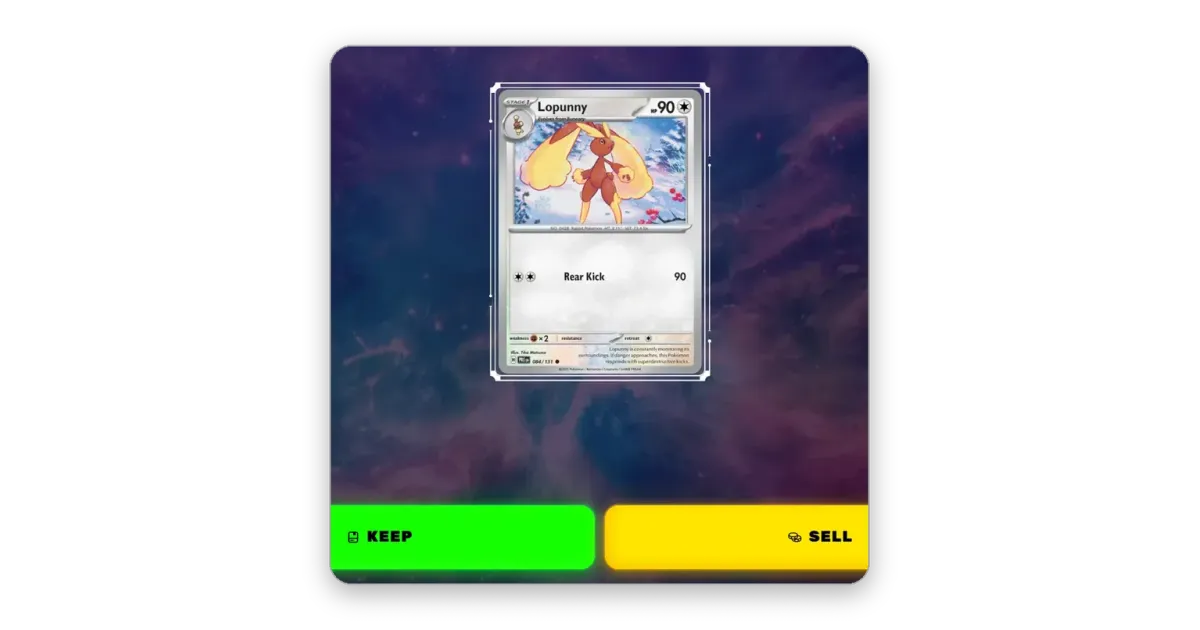
Rip sites sell real physical cards, held in their vaults until you keep them, ship them home or trade them back to the site. To judge the site’s instant trade-in offer, turn it into a share of what the same card has recently sold for, then set that share beside what a marketplace listing would leave you after fees. Before you do any math, write down three things: which value the offer is based on, how long it stays open, and whether it pays to your balance or as site credit. Some sites make this easy: Packed offers a card’s full fair market value with no fee, and TiltRips offers 90% of live market value with no deadline.
What is each offer a share of?
Every trade-in offer is a share of a value the site sets itself. The sites set that value at different moments, offer different shares and give you different amounts of time.
| Site | Value the offer is based on | Share | Window |
|---|---|---|---|
| Rips by Triumph | The app’s own value for the card, set when you bought the pack | The app’s full value | At least seven days |
| Packed | Fair market value, fixed the moment the card comes out of the pack | 100%, with no fee | At least a day |
| TiltRips | Live market value | 90%, with no fee | No deadline |
| Gotya | Fair market value | 90% on a graded card, 100% on a raw card | The time shown with the offer |
| Slabz | The card’s current value | At least 85% | 72 hours after opening |
| Packs.com | The card’s full value at the reveal | 100%, with no fee, as site credit | While the card sits in your backpack |
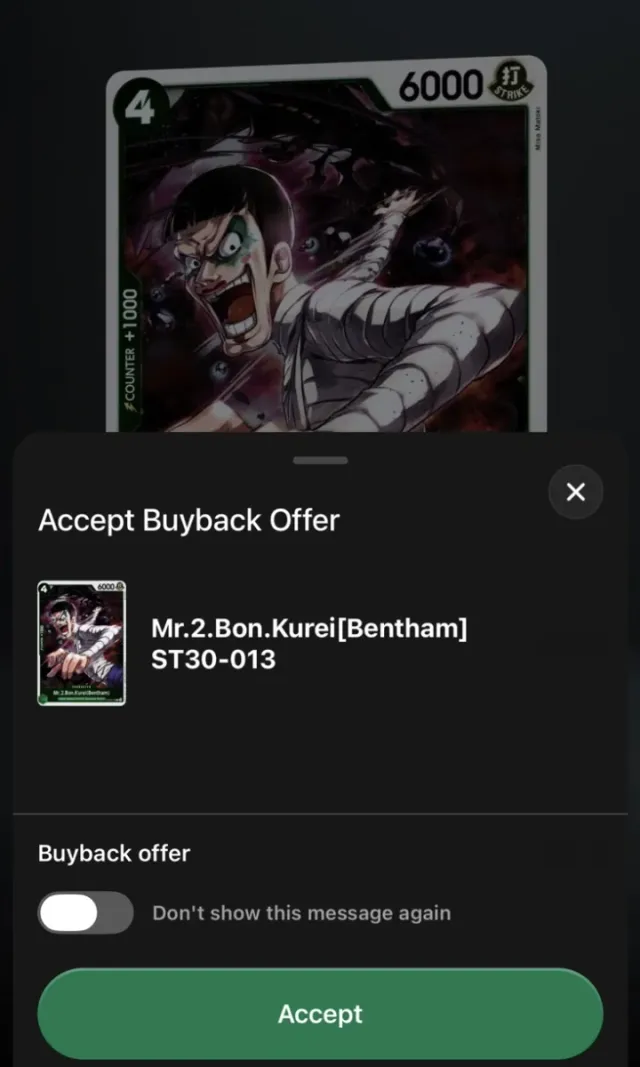
Two more sites set the share before you buy. Phygitals offers between 85% and 100% of a card’s listed value, sets the share pack by pack and prints it before you pay. Glyde shows its trade-in rate before you open, from 85% to 93% of the card’s value, higher on its dearer packs.
Drip Shop Live makes a set offer on each card, open for 7 days.
Each basis has its own catch.
- A value fixed at purchase can lag the market. Rips by Triumph holds the value from when you bought the pack, and Triumph sets those values itself, so check a valuable card against its recent sales before you take an offer. Packed also fixes its value when the card comes out, set from recent sales, the grade and how rare the card is.
- A live value moves both ways. TiltRips shows every card’s live market value and its price history, so you can watch a card for a while before you sell it back.
Step 1: find today’s sold price
Look up what copies of the same card have actually sold for. Match the set, the card number and the printing. For a graded card, match the grading company and the grade too, because a 10 from one grader sells apart from a 10 from another. Use completed sales and skip asking prices, then line them up and take the middle one.
How to find what a card sold for walks through that method, and listed and sold prices explains why the two differ. For raw English Pokémon cards, Rip.fan’s card price lookup gives a dated Near Mint market price from a weekly check. Graded cards sell at different prices that those figures do not cover, so for a slab, use sold listings for that grader and grade.
Step 2: turn the offer into a share
Divide the offer by the sold price you found. This worked example uses made-up figures, Gotya’s 90% share on a graded card and Rip.fan’s arithmetic.
Gotya puts a graded card’s fair market value at $100, so its offer is $90. Today the middle recent sale for the same card and grade is $120, so the offer is 75% of today’s sold price.
Now reverse the case. If the middle recent sale had dropped to $80, the same $90 offer would be 112.5% of today’s sold price. A site’s value can lag the market either way, so the share tells you more than the offer alone.
Step 3: work out what a listing would leave
On a marketplace you choose the price, and the site keeps its seller fee. Staying with the same example:
- Shiny: listing costs nothing up front, and a sale carries a 4% seller fee, so a $120 sale leaves $115.20.
- Gotya: its marketplace charges no seller fee, so a $120 sale leaves $120.
A listing is not instant, and nothing says a buyer will pay your price. Selling a card straight from a vault covers how the money from a sale moves out, and rip site fees explained lists every other charge.
If you would rather sell the card somewhere else, add the cost of getting it out. See what it costs to ship a graded card home and where to sell cards online.
Step 4: decide what the credit is worth to you
How an offer pays matters as much as its share.
- Gotya, Packed and TiltRips pay an accepted offer into your account balance.
- Packs.com pays its full-value offer as site credit, which buys only packs, cards and shipping there and can never be withdrawn. Trading in also needs one deposit on the account first, with a $10 minimum.
- Taking any offer gives up the physical card.
If you would spend the credit on the same site anyway, the difference matters less. Our account credit entry covers the idea.
A simple decision rule
- If the offer, as a share of today’s sold price, is close to what a listing would leave, and you will use the balance on that site, the offer saves you the wait.
- If a listing would leave clearly more, list the card instead.
- If you want to keep the card, ship it before the site’s clock runs out. TiltRips has no clock, so there you can hold a card as long as you like.
Which details are easy to miss?
A quote can be brief. Glyde’s quote holds only at the moment it appears, so go by the figure on screen when you sell. Slabz’s offer closes after 72 hours, though the card then stays in the vault.
Doing nothing can count as a choice. At Rips by Triumph, a card left in the app for seven days is traded in at the app’s own value. At Packed, a card left in the vault for 24 hours is sold back for you at its value.
Auto-sell switches. Drip Shop Live’s Auto Sellback, a switch you turn on before opening, sells every eligible card back at once for a 12% fee. A $10 offer then leaves you $8.80, so leave it off if you want to look at each card first.
Offers and fees change, so read the offer screen and its timer before you decide. Our Phygitals review and Rips by Triumph review set out those two sites’ trade-in terms, and the ranking of rip sites puts every site we track side by side. For the bigger picture, see vault or ship it home? and our comparison of trade-in offers.
Frequently asked questions
What is Phygitals' standard trade-in rate?
Phygitals' default rate is 85% of fair market value, and a pack with a higher rate wears a badge before you buy. The rate and the amount show on screen before you accept, and the value behind them is set the moment the card comes out.
Does Gotya limit the offer on a card bought on its marketplace?
Yes. At Gotya, a card you bought on its marketplace within the last 30 days gets a trade-in offer of no more than what you paid, and the exact amount shows before you accept.
How does Rips by Triumph set the value behind its offer?
With its own semi-automated system, which weighs rarity, recent sales of the same and similar cards, the grade, provenance, authenticity and how long similar cards take to sell. At Rips by Triumph, a later sale above the earlier one, such as $5,000 after $3,000, is likely to raise the figure.
Does Collector Crypt show its trade-in share before you buy?
Yes. Collector Crypt prints a trade-in share of 85%, 90% or 93% of an item's listed value on each pack before you pay, and its listed values come from ALT, eBay and other platforms.