Packed review: card packs with a full-value trade-in
Packed felt like a pretty good service to us: a polished iPhone app with card rates on every pack and a trade-in at a card's full market value.

- Packs from $1
- Games
- Trade-in offer 100% of listed value 24 hours
- Apps iPhone
Scores
The score averages these criteria by their weights. How we rate sites
| Criterion | Weight | Our score |
|---|---|---|
| Trust and track record | 20% | 7 out of 10 |
| Card rates published | 15% | 8.5 out of 10 |
| Trade-in terms | 15% | 8.5 out of 10 |
| Fees | 15% | 7 out of 10 |
| Withdrawal speed | 10% | 8 out of 10 |
| Shipping and vault | 10% | 6.5 out of 10 |
| App and site | 8% | 8.5 out of 10 |
| Support | 7% | 6.5 out of 10 |
What we found in our test
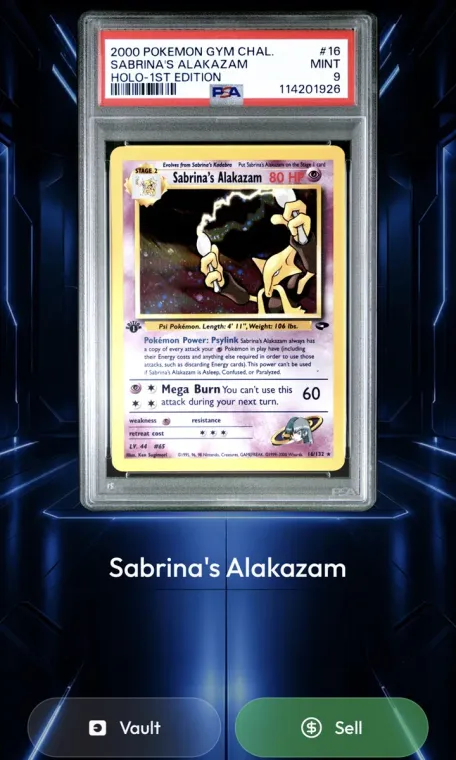
- Biggest cardA PSA 9 first edition Sabrina's Alakazam from the Gym Challenge set, the highest listed value of our test.
- What came outMost cards in PSA holders, with some raw Pokémon cards among them, and Pokémon cards in English and Japanese.
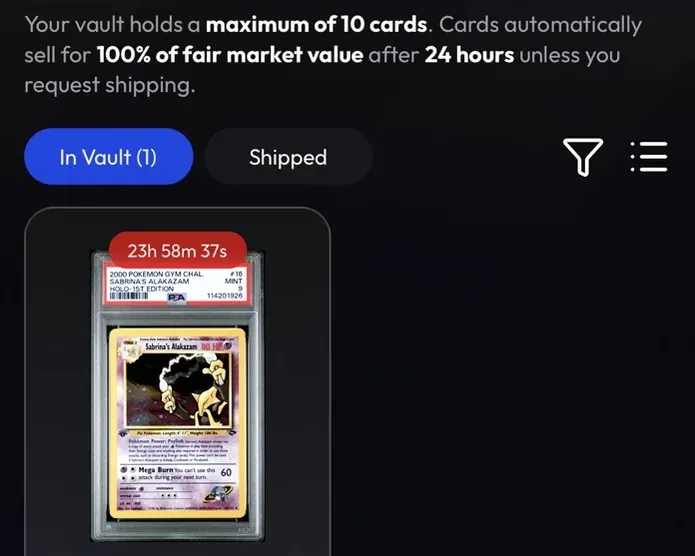
- The vaultOur card in the vault showed a countdown of just under 24 hours, after which Packed sells it back at its value unless you ask for shipping.
How we tested
We added money to the Packed iPhone app and opened more than 20 packs in one night, across Pokémon, baseball, basketball and One Piece, keeping screenshots as we went. Its trade-in, withdrawals, shipping and support are scored from what Packed publishes, next to what our screenshots show. This review is a human and AI collaboration: our own use of the app supplied the screenshots and notes, and AI wrote the review from them.
What stood out
Packed struck us as a pretty good service. The app is polished, every pack shows its card rates before you pay, and any card you don’t want sells back at its full market value with no fee, into a balance you can withdraw. A couple of our cards stood out for the size of their packs.
How it works
Packed sells packs of real cards for two card games and two sports, picked from tabs at the top of its pack store: Pokémon, basketball, baseball and One Piece. Every pack gives one card, and most of ours came graded in PSA holders.
- Add money to your account balance by card.
- Pick a pack and read its card rates under the pack.
- Tear it open. The card appears in its holder with its name and listed value.
- Decide. Sell it back, keep it in the vault for now, or ask for it to be shipped.
Hosts also open packs on live shows in the app, which you can watch without buying, and a card from a live pack can go to an auction among the viewers.
The packs
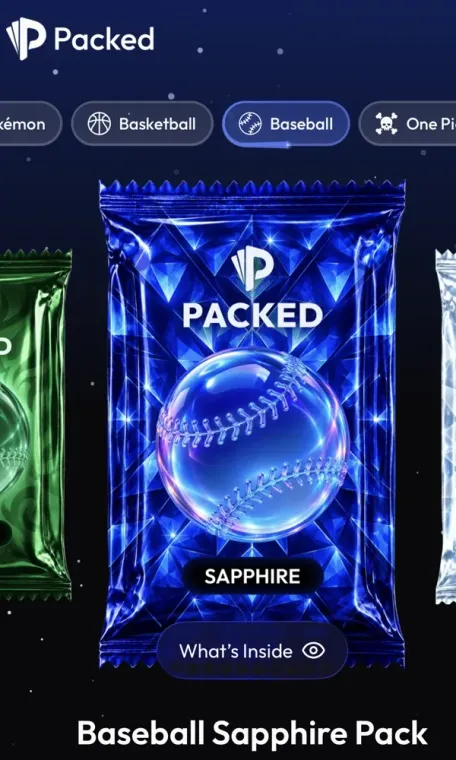
Pokémon has the longest ladder, nine tiers from Basic to Grail, and baseball, basketball and One Piece each have four, from Platinum up to Diamond. In our screenshots the Pokémon packs ran from $1 for the Basic pack through $25 for Gold, $250 for Sapphire and $500 for Diamond, up to $1,000 for the Grail pack. The store shows one tier at a time with the next ones peeking in at the sides, and each pack has its own foil colour, its own art for the card game or sport, and a What’s Inside button.
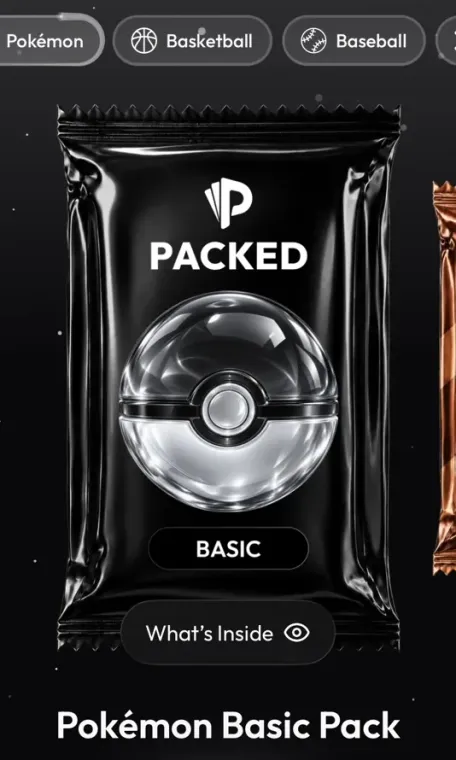
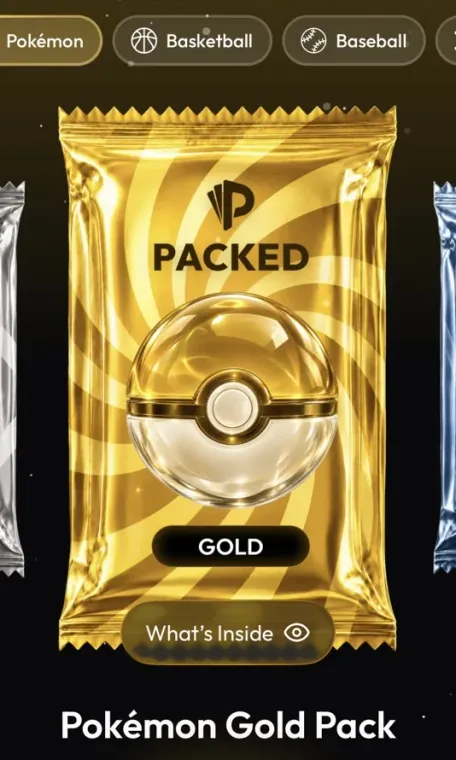
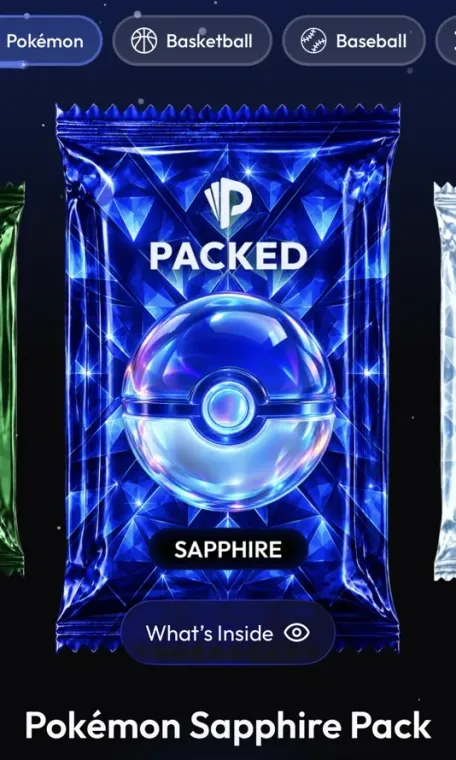
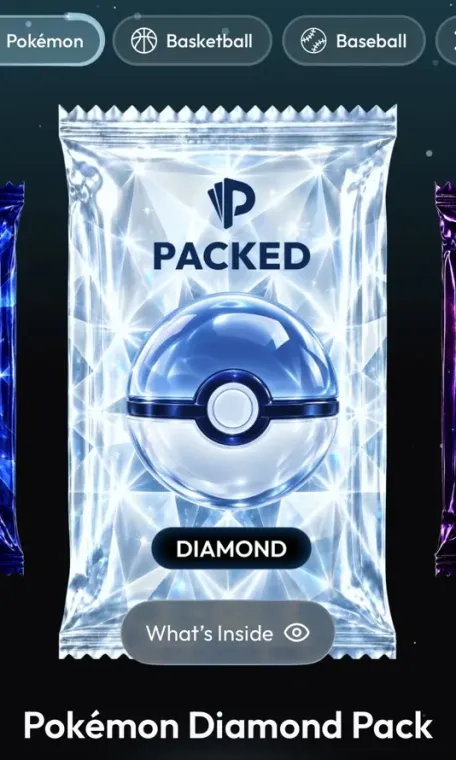
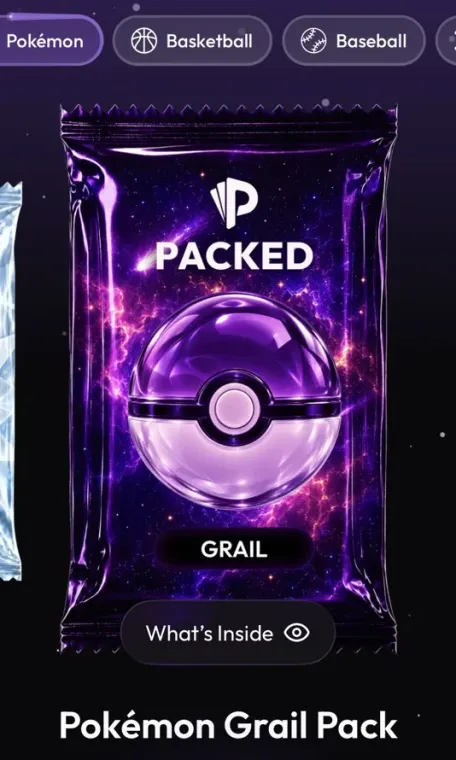
Below the pack sit its lowest and highest card value, a picker for how many packs you want, and the buy button with the price on it. The lowest value is Packed’s estimate of the least the card you get will be worth, and the highest is the best card still in that pack’s pool when you look.
Card rates
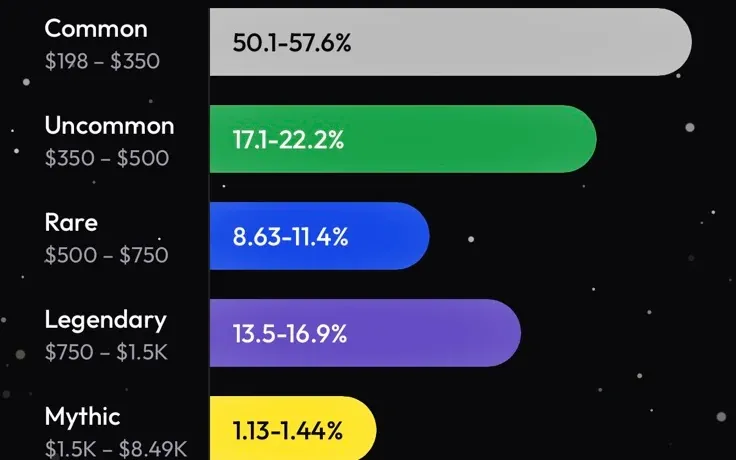
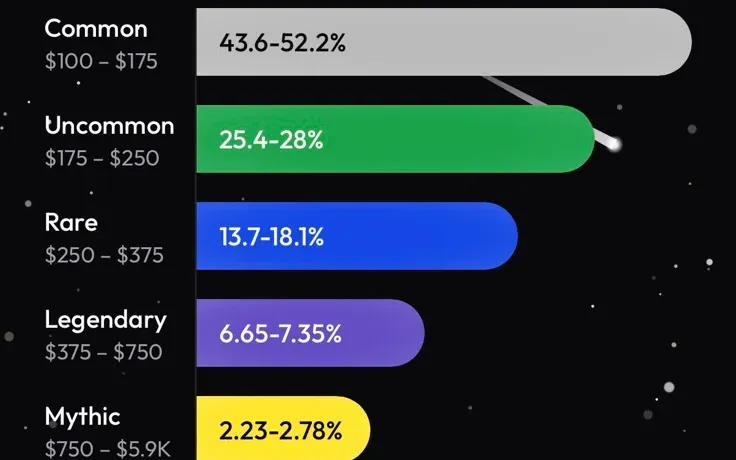
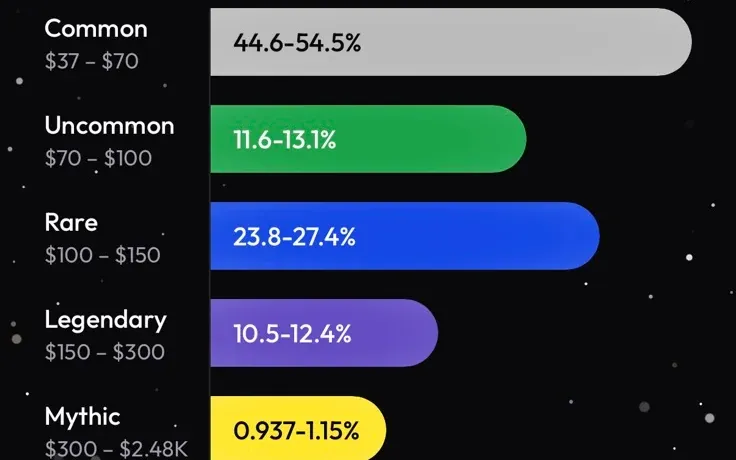
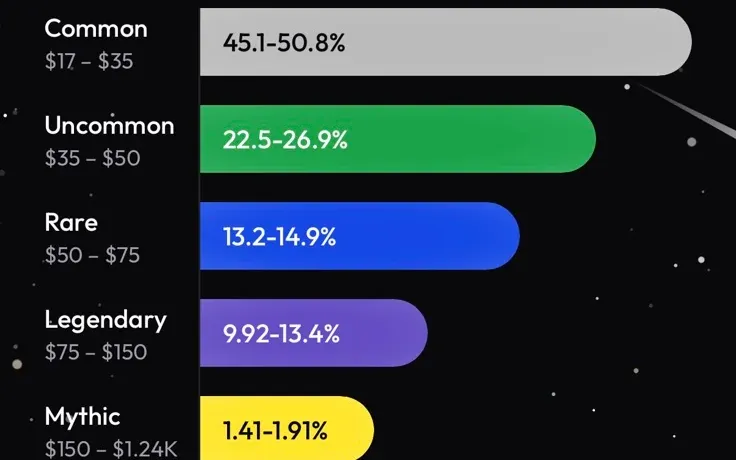
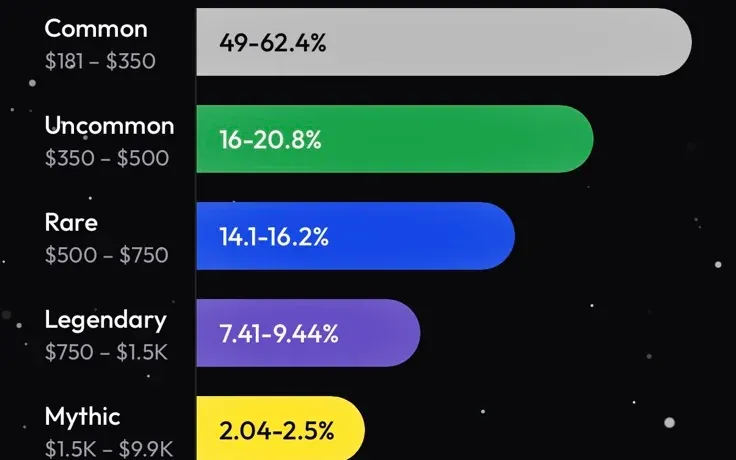
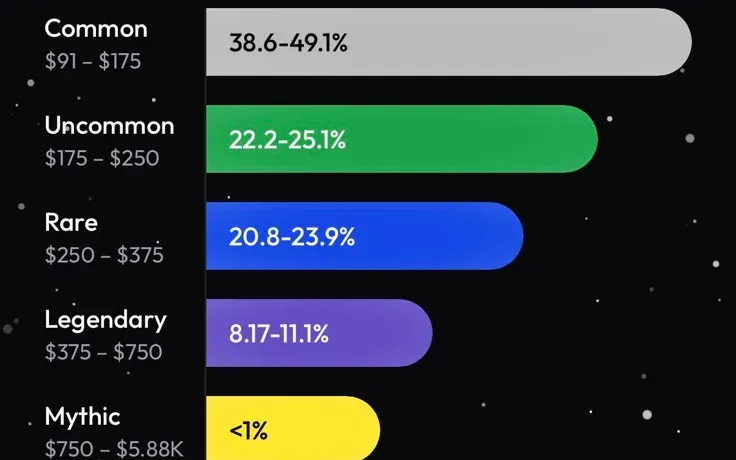
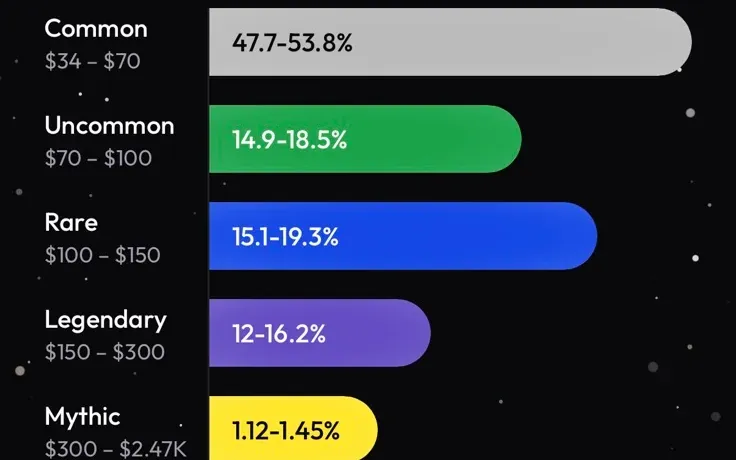
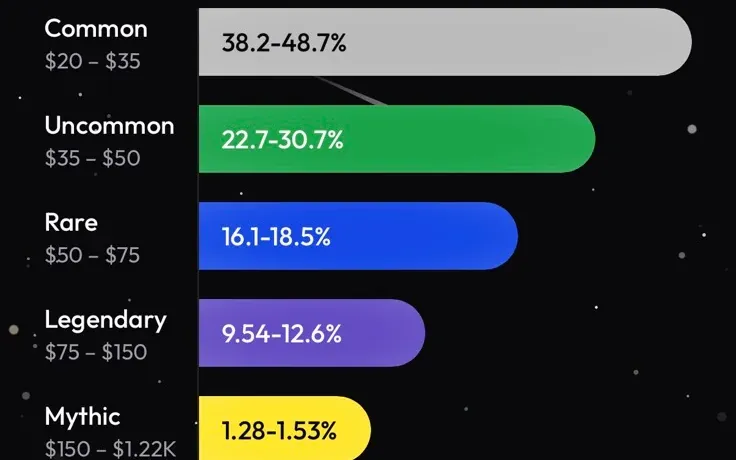
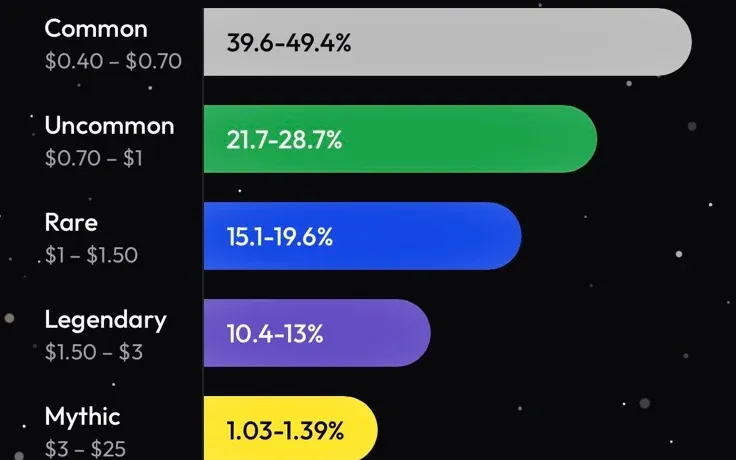
Under every pack, before you buy, five value bands from Common to Mythic each show their dollar range and the share of packs they come up in. The shares are printed as small ranges, because the cards behind each pack change as they come and go, and the figures are the same for every buyer. Every tier uses the same five bands, and the dollar ranges climb with the tier: the lowest band on the Grail pack starts well above the top band on the Basic pack. Go by what the screen shows when you buy.
-
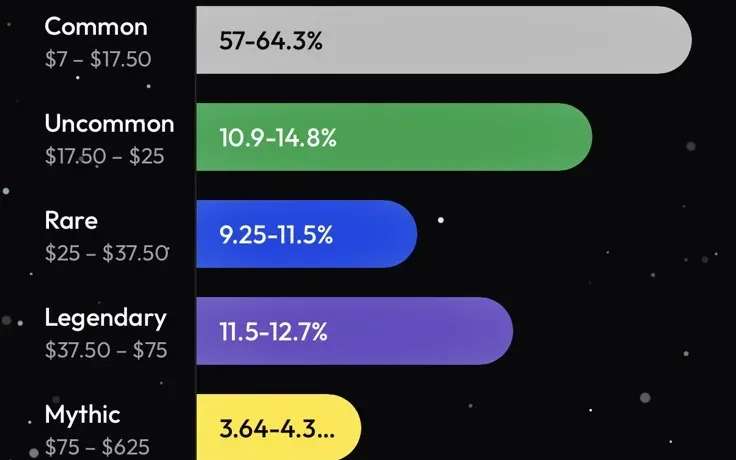
The card rates under the Pokémon Gold pack.
-
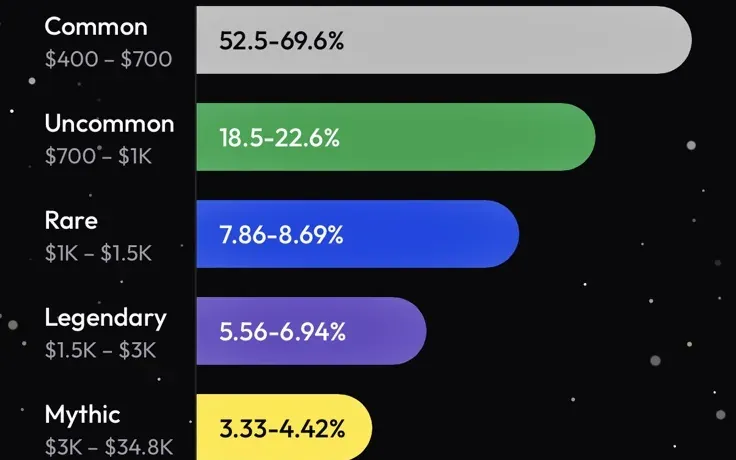
The same five bands under the Pokémon Grail pack, the top tier.
Opening a pack
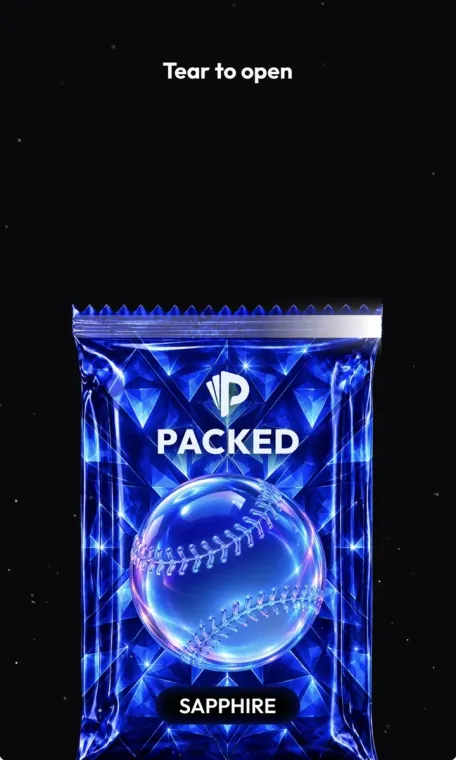
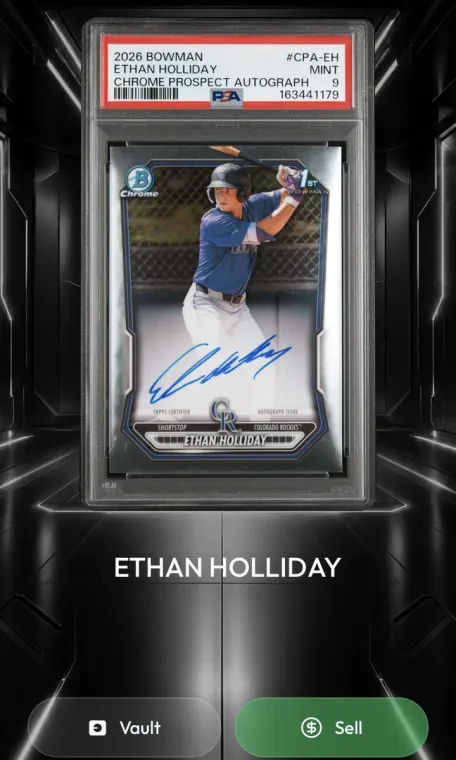
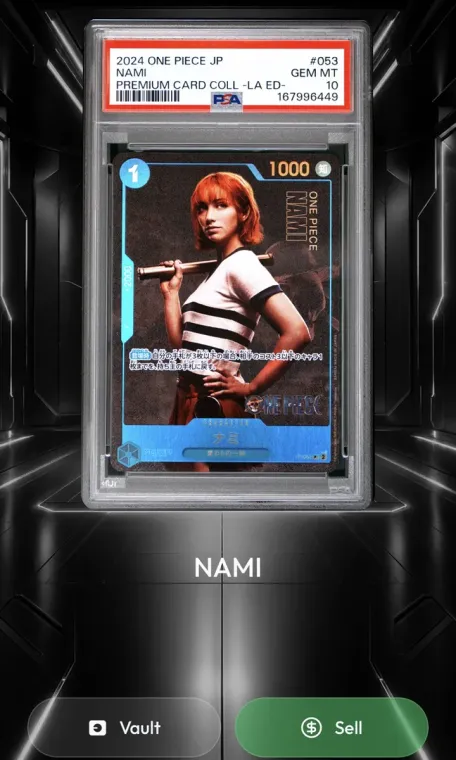
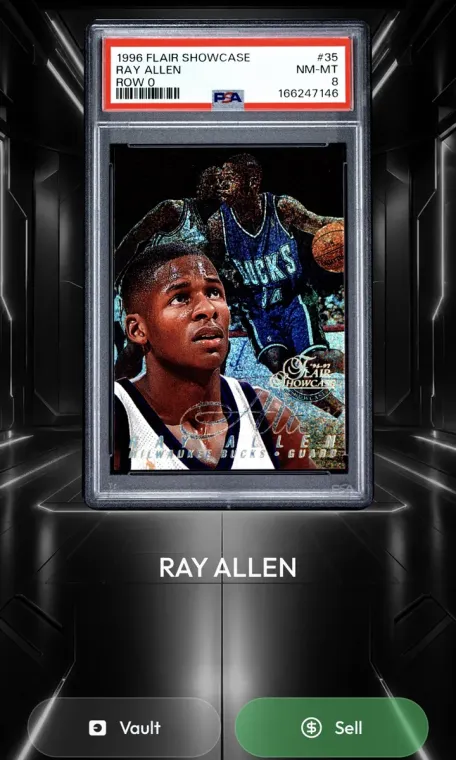
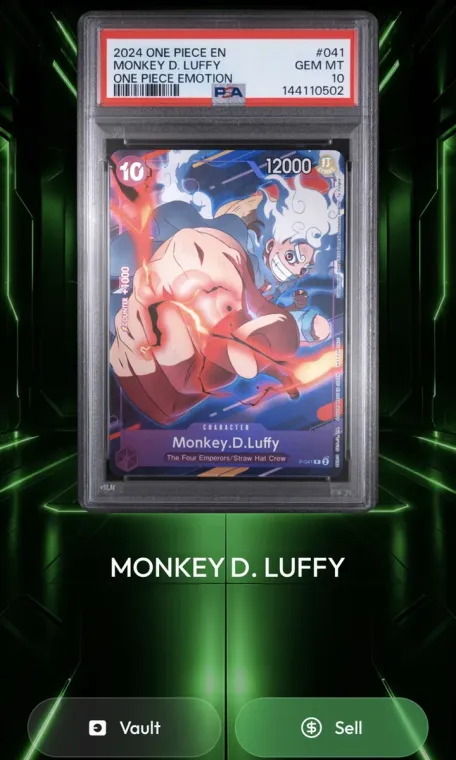
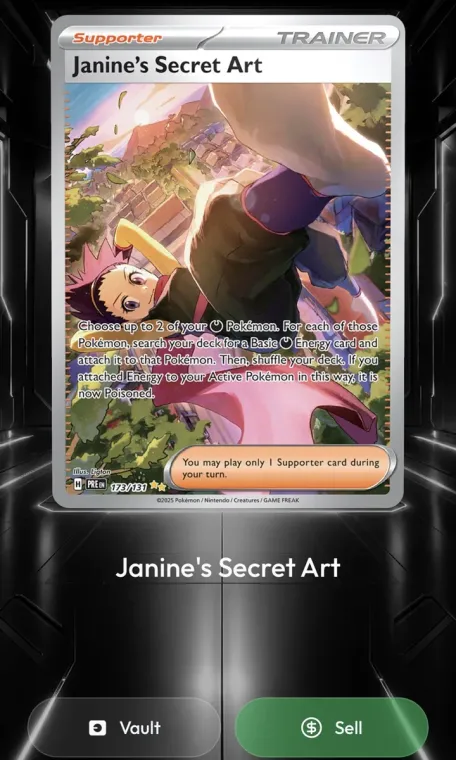
Once you buy, the app shows the sealed pack under the words Tear to open, and then the card appears in its holder in a lit corridor, with its name and listed value below it. The light follows the card’s value band: white for the lowest band, then green, blue and purple as the bands go up. Three buttons sit under every card: Vault, Sell and Share.
What came out of our packs
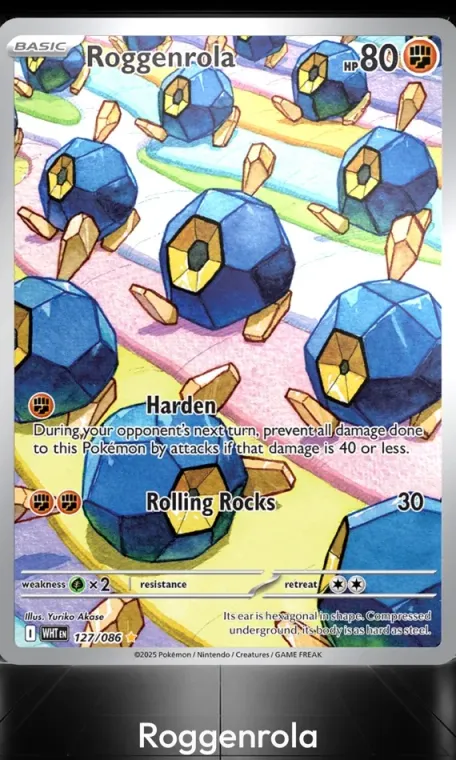
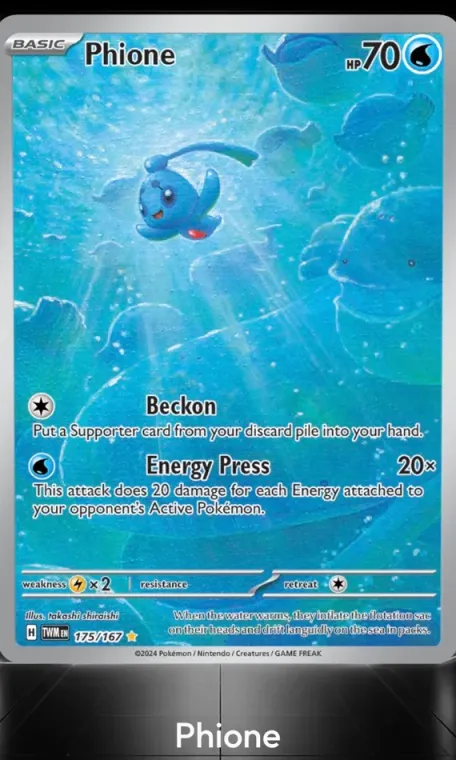
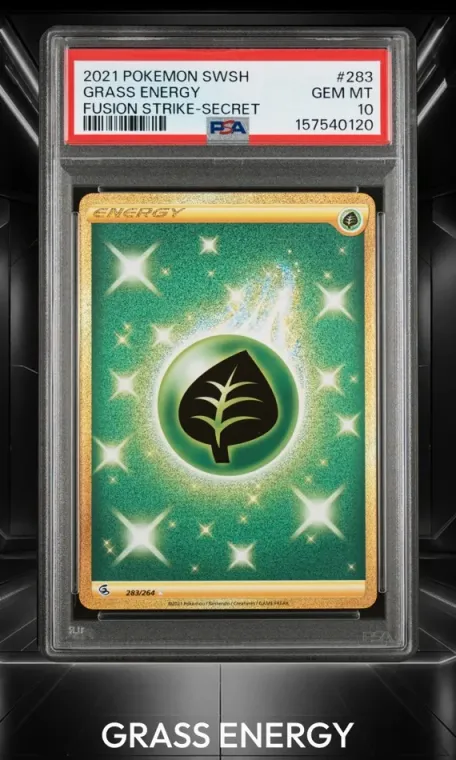
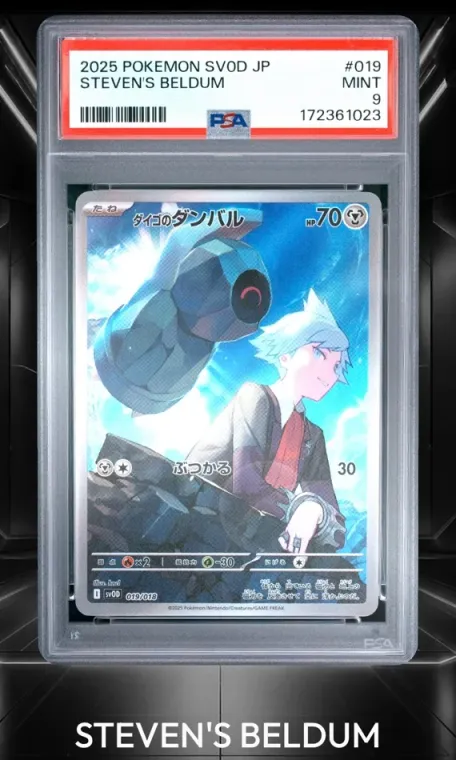
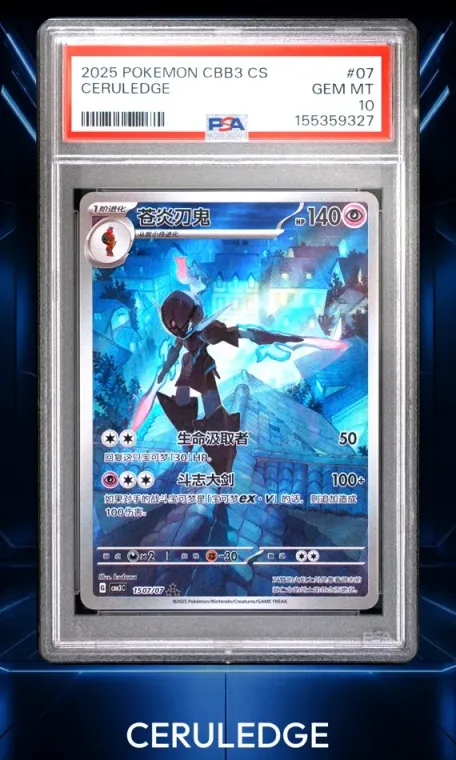
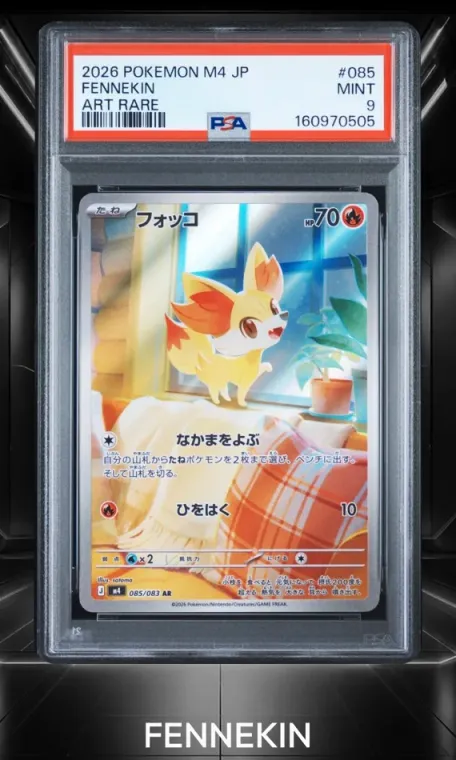
Our night covered a wide range. The best card was a first edition Sabrina’s Alakazam from Gym Challenge, a 2000 Pokémon card in a PSA 9 holder, listed at $1,325. Among the rest were a Charizard VMAX from Darkness Ablaze and a Shining Magikarp from Celebrations, both PSA 10, a 2007 Japanese Raikou and a run of newer Japanese Pokémon cards such as a Mega Lucario ex and a Dudunsparce ex. One Piece gave us Nami, Monkey D. Luffy and Izo, all PSA 10, and the sports packs a 1996 Ray Allen, a James Wood from Topps Cosmic Chrome and an autographed Ethan Holliday prospect card from Bowman Chrome.
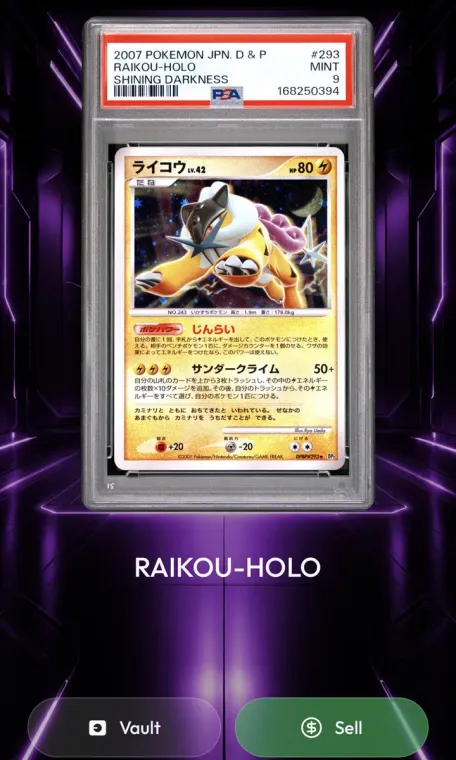
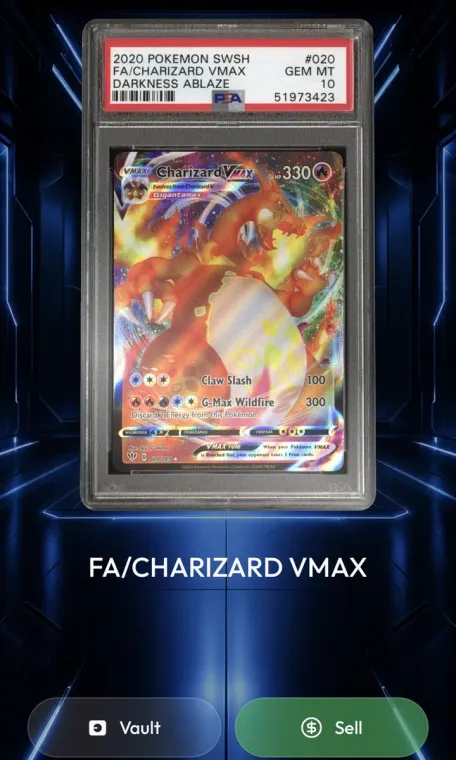
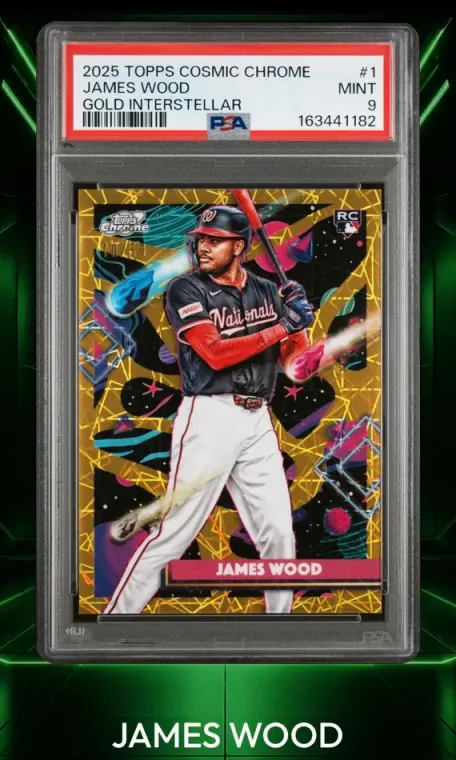
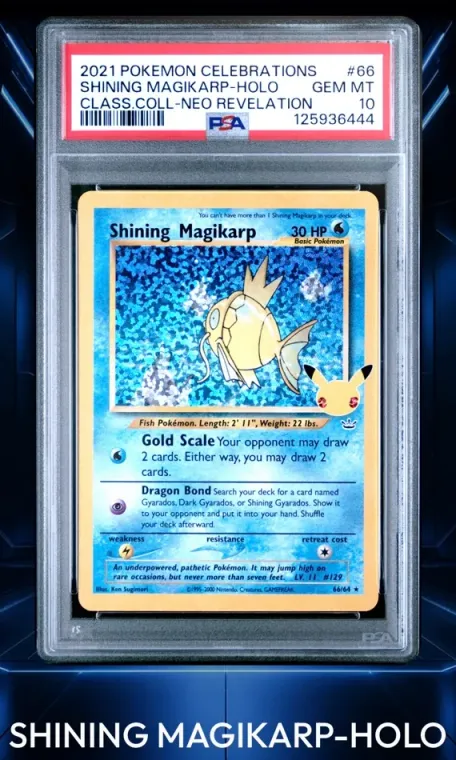
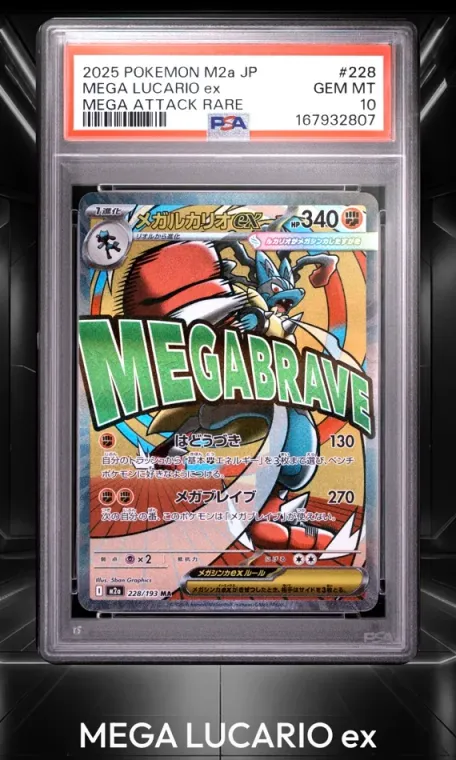
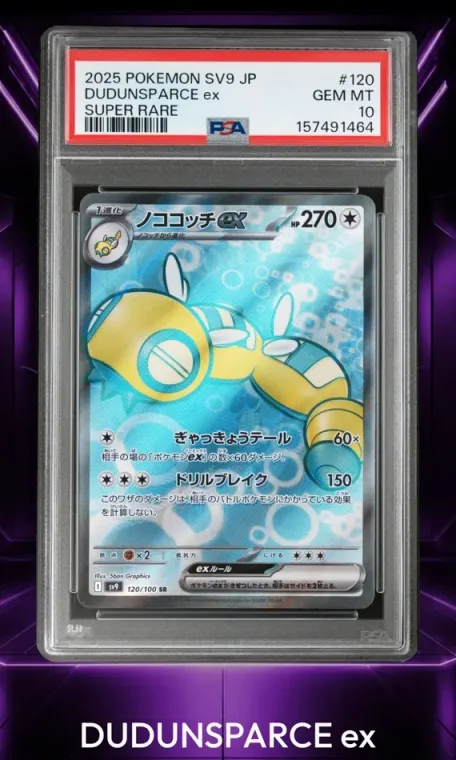
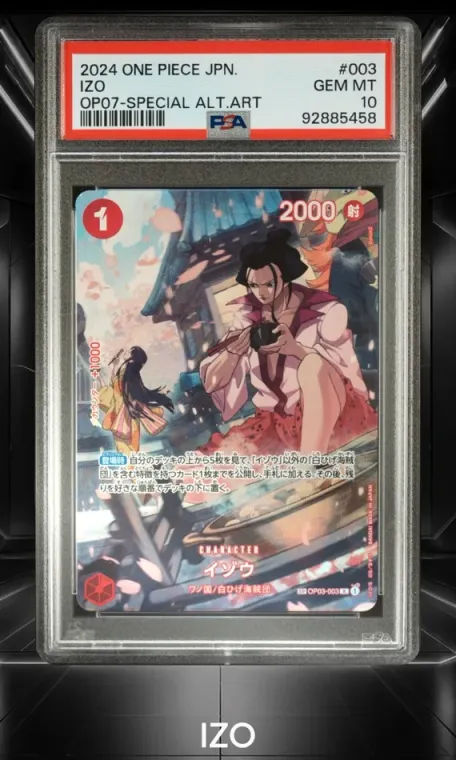
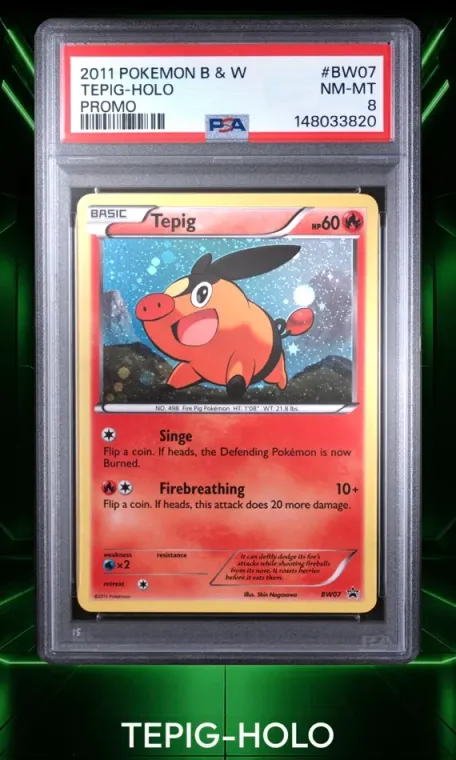
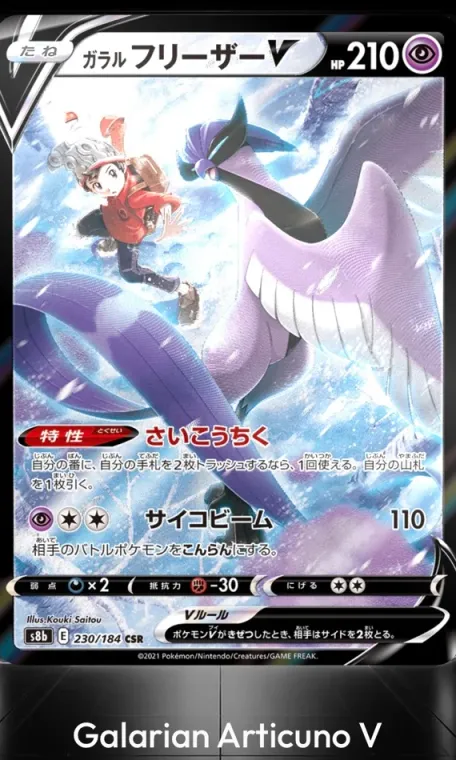
Four of our cards were raw rather than graded, all Pokémon, among them Janine’s Secret Art and a Japanese Galarian Articuno V. Most of our cards came in at a low listed value: nearly two in three were listed under $100. A graded card’s certificate number lets you look it up with PSA, and our guide to checking a graded card’s cert shows how.
Trade-in offers and selling
Every card comes with an offer at 100% of its fair market value, fixed the moment it comes out of the pack, and selling it back costs nothing. The money lands in your account balance, and it can be withdrawn. Packed sets that value itself from recent sales, the grade and how rare the card is, so set it beside recent sold prices before you take it; our guide on how to judge a trade-in offer shows how.
The vault is where to keep an eye on the clock. It holds 10 cards at most, and a card left there for 24 hours is sold back for you at its value, so ask for shipping that same day on any card you want in hand.
Fees and shipping
You pay for packs by card. Selling a card back is free, and the money from your sales can go to a debit card, a bank account, PayPal or Venmo from $10, once you have passed an identity check. An instant withdrawal takes about 10 minutes on average, and a bank transfer up to 2 business days. Money you add can only buy packs, so plan to withdraw from what your sales bring in.
Cards ship to US addresses once the identity check is done. The shipping fee shows in the app, and sales tax is added to each shipment from your balance. If a card can’t be found when you ask for it, Packed sends one worth 125% of its value instead.
Support and track record
Help sits in the app’s Profile tab, with an email address and a Discord server beside it, and a short FAQ answers the common questions in plain words. The app first came out in July 2026, and by October 26, 2026 it was rated 4.5 out of 5 from about 3,500 ratings on the App Store.
What other collectors say
- The app and the trade-in. Many App Store reviewers like how the app looks and how easily a card sells back.
- Card values. Recent reviewers often say most of their cards were worth little.
- Checks and withdrawals. Some recent reviewers had trouble passing the identity check or waited on a withdrawal, and a couple found shipping a single card costly.
Who it suits
Packed suits a collector of Pokémon, One Piece, baseball or basketball cards who likes an app, reads the card rates before buying and is happy to sell most cards straight back at full value. New users who sign up through our link get a free pack, and our partner offers page has the details.
Pros and cons
Pros
- A trade-in offer of a card's full market value, with no fee
- Card rates by value band on every pack, shown before you buy
- Money from instant trade-in offers can go to a debit card, bank account, PayPal or Venmo
- Packs for Pokémon, One Piece, baseball and basketball
- A free pack for new users who sign up through our link
Cons
- Most cards we opened had a low listed value
- A card left in the vault for 24 hours is sold back for you
- The vault holds no more than 10 cards
- An iPhone app only, with no Android app
Frequently asked questions
What does Packed sell?
Packs of real trading cards in its iPhone app: Pokémon, One Piece, baseball and basketball, most of them graded by PSA, with some raw cards. Each pack gives one card.
Does Packed show card rates?
Yes. Before you buy, each pack shows the lowest value of the card it gives, the highest value in it, and five value bands with the share of packs each comes up in.
Can you sell a card back to Packed?
Yes, at 100% of the card's fair market value, with no fee, and the money goes to your account balance.
Where does Packed send the money from a trade-in offer?
To a debit card, bank account, PayPal or Venmo, from $10, once you have passed an identity check. An instant transfer takes about 10 minutes on average.
Does Packed ship cards?
Yes, to US addresses once your identity check is done. The shipping fee shows in the app, and sales tax is added to each shipment.
Does Packed give new users a free pack?
Yes. New users who sign up through our link get a free $25 pack.