Instant rips, live breaks and repacks compared
Three ways cards get opened online: instant rips on a rip site, live box breaks and repacks. Who opens the pack, who holds the card and what to check first.
By the Rip.fan Editorial Team.
Published Updated 6 min read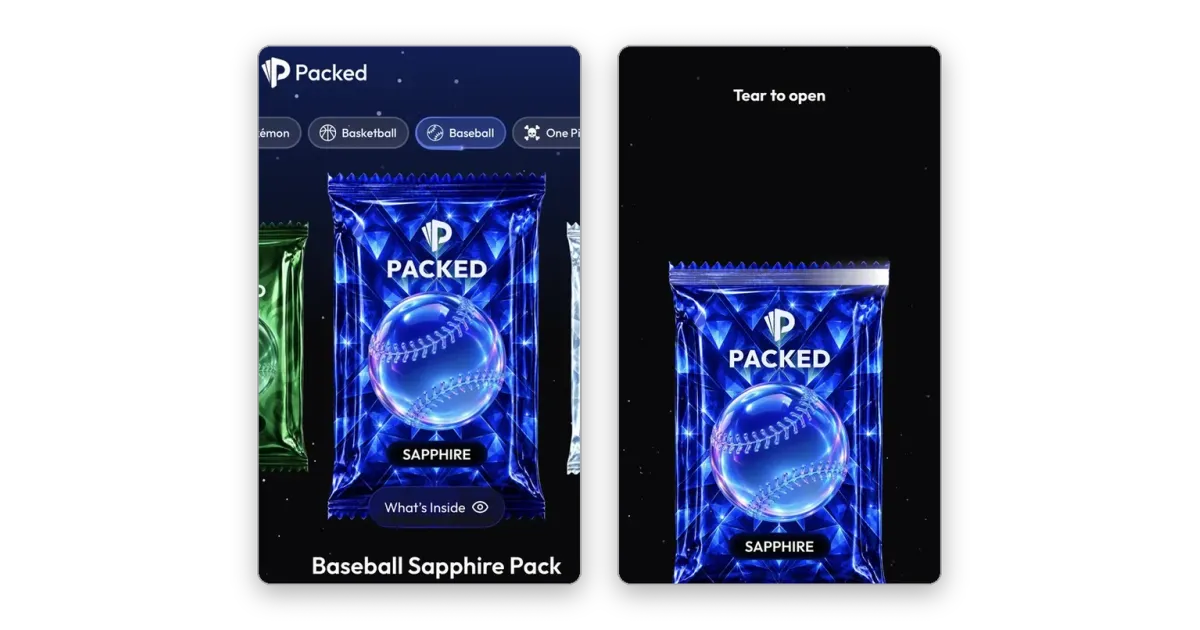
Cards get opened online in three main ways. In an instant rip, you buy a digital pack on a rip site, the site assigns one of the cards it already holds, and the card stays in its vault until you decide what to do with it. In a live break, a breaker sells spots in sealed boxes or cases and opens them on a stream, and each buyer receives the cards that match their spot. A repack is a pack filled with cards a seller picked, rather than a pack sealed by the card maker. The lines blur, because one pack can be described in more than one way.
How do the three formats compare?
| Instant rip | Live break | Repack | |
|---|---|---|---|
| What you buy | A digital pack drawn from a listed pool | A spot in a break, such as one team | A pack a seller filled with cards it chose |
| Who opens it | The site assigns the card when you pay, and the reveal shows it | The breaker, on a live stream | The seller packs it; you, or a site’s reveal, open it |
| When you see the card | Right after you pay | As the boxes are opened, on the stream | When the pack is opened |
| Who holds the card next | The site’s vault, under your account | The cards for your spot are sent to you | Depends on the format: you, or a site’s vault for a digital one |
| What is listed before you buy | A pool, with card rates by tier or value range | The product and the rules for how spots are set | Whatever the seller chooses to list |
Instant rips: the site opens the pack for you
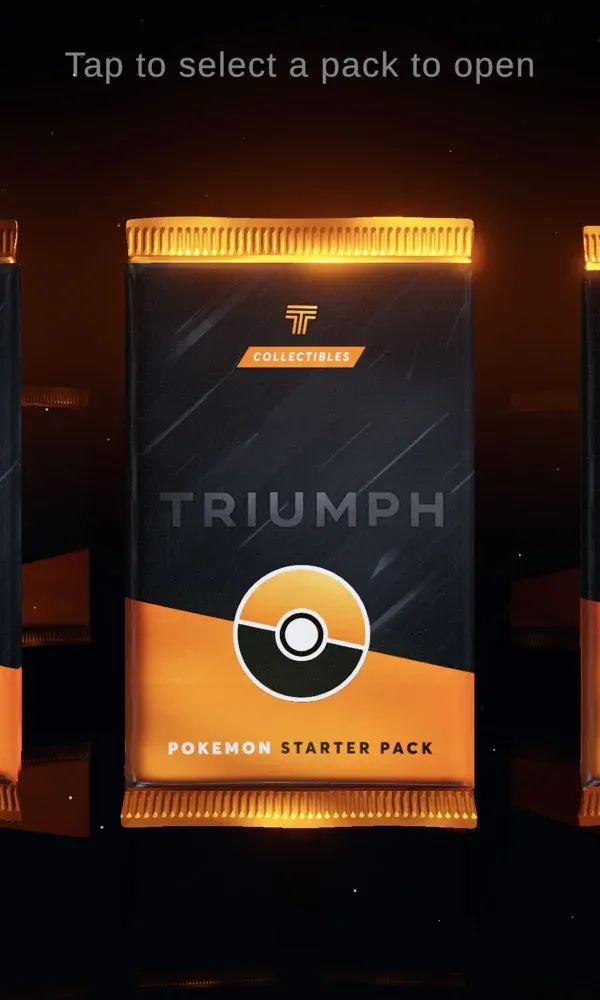
An instant rip is a rip site selling real physical cards it already holds, in pack form, and keeping the card in its vault until you keep it, ship it home or trade it in. Rips by Triumph is a clear example. Its packs hold real cards that sit in its vault until you ship them or trade them in. Every pack sets out the lowest and highest card value it can give, with a link to what is inside. The card is decided when the purchase goes through, and the opening animation only shows it. The result screen then gives the card, its value in the app and two buttons: sell it back, or keep it in the vault. A kept card can stay for seven days at most before the app trades it in at its own value, so ship anything you want within the week.
Other rip sites follow the same pattern. Phygitals gives two choices on every result screen: sell the card back at once for the amount shown, or keep it in the vault and have it shipped later. Packed puts three buttons under every card, Vault, Sell and Share, and you decide on each card within a day.
Because the card is real and held for you, the cost questions come after the reveal: the trade-in fee, the seller fee or the cost of shipping. Rip site fees explained lists them, and how online pack opening works walks through each step. When the pack holds one graded card, it is often called a slab pack; our slab packs guide covers what is inside one.
Live breaks: someone else opens the boxes on camera
A break splits sealed boxes or cases among a group of buyers. Breaks let collectors split the cost of a product, usually by the box or case, and the boxes are opened on a live stream. Drip Shop Live, for one, is an app built around auctions and card breaks streamed live, with its sellers running the breaks on camera.
What you buy is a spot, and the break’s format decides what the spot gets you. In a pick-your-team break, the spot is for one team, and the cards from that team go to you. There are also random-team breaks, where the teams are assigned once every spot is sold and every spot costs the same, and personal breaks, where you buy a box or case of your own, the breaker opens it live and everything goes to you. Not every card is sent in some breaks: key cards such as autographs and numbered cards ship, but base cards are sometimes left out to keep costs down. Confirm what your spot includes before you pay. Read the listing for shipping costs.
Unlike an instant rip, you buy a share of a whole box as it is opened and then receive the cards that match your spot. Our guide to box breaks covers the formats in detail, and hobby vs retail boxes explains what is in the boxes being broken.
Repacks: a seller decides what goes in
Repacks, short for repackaged, have become a popular option as the cost of sealed packs climbs. Card dealers, card shops and breakers all sell them. A repack can hold common and base cards or graded cards, and it can follow a theme such as a player, a year or a sport.
The main concern is a lack of transparency about what is inside, and some repacks have held counterfeit or trimmed cards. Another criticism is that a repack can hold lower-value cards or duplicates, and many in the hobby argue that sellers should provide a checklist of every card that can be found.
A repack is sold as a seller’s own product, unlike a resealed pack. For factory packs that were opened and closed again to pass as new, see our guide to spotting resealed Pokémon packs.
Where do the formats overlap?
More than the names suggest.
A slab pack can look like a repack. Repacks sometimes hold graded cards, and every Slabz pack holds one graded card. The names differ, so read the seller’s own description of what is in the pack and who holds the card.
A set pack can look like a repack too. Packs.com builds its own packs from one set to match a real booster’s card rates, rather than selling factory-sealed boosters, and it lists every card in the set with how often it comes up.
A live stream can sell instant rips. Drip Shop Live sells Instant Packs beside its live breaks: digital packs that reveal real cards held in its vault. In the Packed app, hosts open packs on live shows you can watch without buying, and a card from a live pack can go to an auction among the viewers.
So the label matters less than four facts: who opens the pack, when you see the card, who holds it next, and what was published before you paid.
What should you check before you buy each one?
For an instant rip:
- Is the card pool listed card by card, or only as value ranges?
- When were the card values set, and by whom?
- How long is the trade-in window, and what fee does it take?
- What does it cost to ship the card home?
For a break:
- What product is being opened, and how many boxes?
- How are spots assigned: by choosing a team, at random or by bidding?
- What exactly does your spot receive?
- Who pays to send the cards, and how much?
For a repack:
- Is there a checklist, and does it list every card?
- Who made the repack, and what does it promise?
- If it is digital, what are the vault, trade-in and shipping terms?
Terms used here are defined in the glossary, including mystery box and sealed product.
Frequently asked questions
What does every Rips by Triumph pack name before you buy?
At Rips by Triumph, every pack names at least the maker of its cards, the series, the price and how many cards it holds, and a pack purchase is final.
What happens to a Packed live pack if you leave the show?
The host can open it without you, and the card goes into your inventory. At Packed, the card in a live pack is fixed when you pay, even though it shows only when the host opens it.
How fast does Drip Shop Live ship an Instant Pack card?
At Drip Shop Live, a graded card from the vault reaches USPS within 3 business days of your claim, and a standard Instant Pack order ships within 7 to 14 business days.
Which games do Packs.com's set packs cover?
Pokémon, Magic, One Piece and Riftbound. Each Packs.com set pack holds the same number of cards, with the same rarity structure, as the booster it copies, and you can open 1 to 4 at a time.
Who supplies the cards in a Slabz pack?
Its partner Collector Crypt finds the cards, handles grading, keeps them in its vault and ships them, while Slabz is where you choose, pay for and open a pack. Every Slabz card is graded by PSA or CGC.