Box breaks explained: team, division and personal formats
How a box break works, what each spot format gets you, how many spots each league's teams make, and what eBay, Whatnot and Fanatics Live ask of breakers.
By the Rip.fan Editorial Team.
Published 7 min read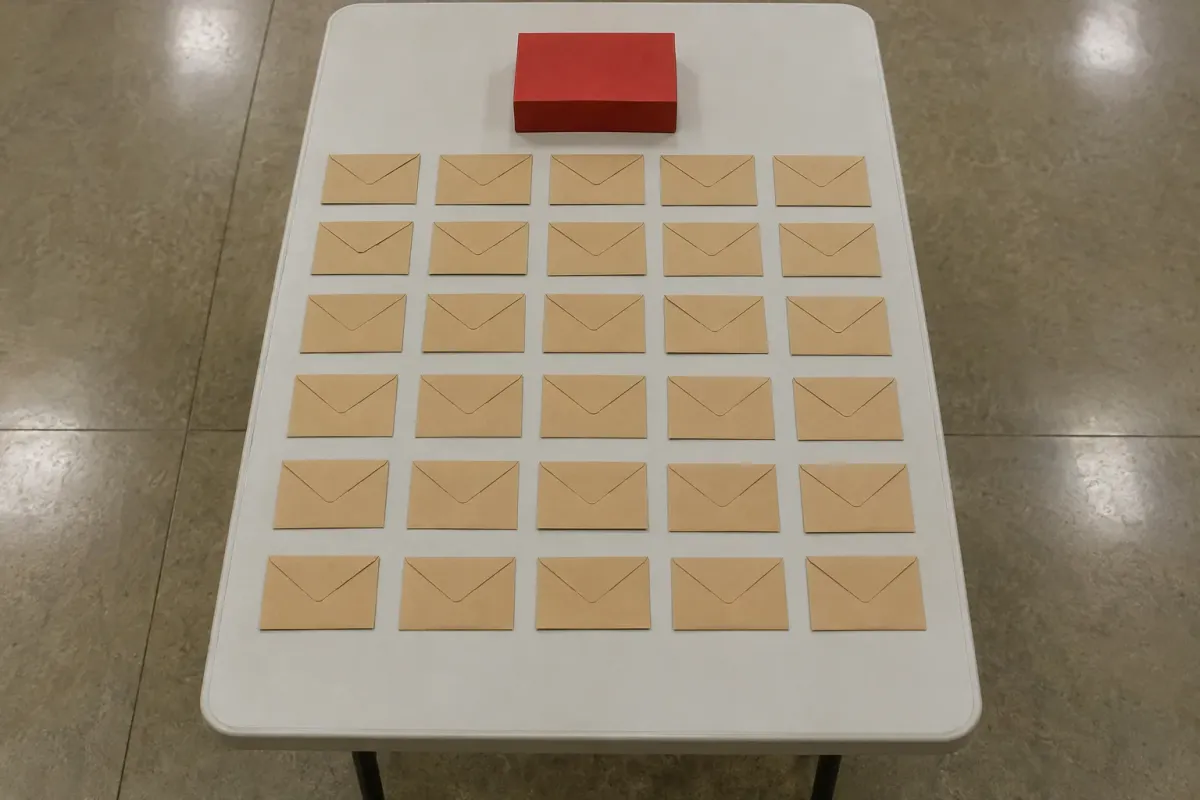
A box break is a way to buy a share of a sealed box or case instead of the whole thing. A breaker lists the product and sells spots in it, often one team per spot. Once every spot has sold, the breaker opens the product on a live stream, and each card goes to the buyer whose spot it matches. The cards then ship to each buyer.
How does a box break work?
The steps are much the same on every platform.
- The breaker lists the product. Fanatics Live requires each break description to give the year, the set, the maker and the league.
- Buyers buy spots. On eBay, a spot sells at a fixed price the host sets, or by auction.
- The product is opened live. On eBay, the opening starts once all spots are sold. Fanatics Live requires every product to be opened during the stream, except a personal break that the buyer asks to have sent straight to them.
- The cards are sorted and shipped. Each card goes to the spot it matches, and the cards ship to each buyer after the stream.
A spot buys cards, not a particular card. On eBay you cannot pick specific cards: you get what the opened packs hold for your team or player.
What are the main break formats?
| Format | What one spot covers | How spots are set | Price pattern |
|---|---|---|---|
| Personal | The whole box or case | You buy all of it | Everything in the product goes to you |
| Division | Every team in one division | Set by the break’s rules | Costs more per spot, since fewer spots share the box |
| Pick your team | One team | You choose the team when you buy | Teams with top rookies or autographs in the product usually cost more |
| Assigned team | One team | Teams are handed out after every spot sells | Every spot costs the same |
| Player | One player | Chosen or assigned, by the break’s rules | Can be among the most affordable spots |
How are teams assigned when nobody picks?
In an assigned-team break, also called random team, no buyer chooses. Once every spot has sold, the teams are handed out. Whatnot sellers can use its in-app tool for this, which runs on a public, open-source library, so the seller does not decide who gets which team. On Whatnot, every assignment happens live on camera, where buyers can watch it.
The format you pick changes what you pay for. In pick your team, you pay for a known team, and the price follows that team’s players in the product. In an assigned-team break, every spot costs the same because nobody chooses.
What about repacks and instant rips?
Repacks regroup cards that were already opened into new packs, so they are not a break of a factory-sealed box. Our guide to instant rips, breaks and repacks compares the three ways cards get opened online.
How many spots does a break have?
In a team break, each spot is one team, and in a division break each spot is one division. So the league sets the count, when the product covers every team. The four major North American leagues split up like this.
| League | Teams (team break spots) | Divisions (division break spots) | Teams in each division |
|---|---|---|---|
| MLB | 30 | 6 | 5 |
| NBA | 30 | 6 | 5 |
| NFL | 32 | 8 | 4 |
| NHL | 32 | 4 | 8 |
A team spot covers only that team’s cards from the product, so it is a small share. In an NFL team break, one spot is one team of 32, and in an NHL division break one spot covers 8 of the league’s 32 teams.
What if your team has no cards in the box?
It can happen. On eBay, no team or player is guaranteed to appear in the packs opened, and whether a seller offers anything for a spot that comes up empty varies by seller. Two platforms set a floor:
- On Whatnot, every buyer still receives a card even if their team does not appear.
- Fanatics Live requires that every buyer in a break receives trading cards, whatever the format.
Read the listing for the breaker’s own terms before you buy.
What do you actually receive?
The cards for your spot from the opened product, though not always every one of them. Base cards are sometimes left out of breaks to keep costs down, particularly on shipping, while key cards such as autographs and numbered cards ship. Whether base cards ship varies by product and by breaker, so check the description first.
On Whatnot, a break may offer only what comes out of the sealed product, and breaks are for trading cards and sports cards only. For what the cards themselves are, our guides cover parallels, rookie cards and autographs, patches and short prints.
What rules do eBay, Whatnot and Fanatics Live set?
Each platform sets its own rules.
| Rule | eBay | Whatnot | Fanatics Live |
|---|---|---|---|
| Who may run breaks | Only pre-approved sellers | Sellers are vetted | |
| Opening on camera | Opened live once all spots sell | Assignments and openings happen live on camera | Every product opened on stream, except personals sent direct; the breaker must stay on camera |
| Least a buyer receives | No team or player is guaranteed to appear | A card, even if their team does not appear | Trading cards for every buyer, in any format |
| Recording and cameras | Every break on eBay Live is recorded and kept for later viewing | At least three cameras during every live stream, including a security camera | |
| A break that does not fill | A presale break may not be canceled for failing to fill; it must be moved and every buyer notified | ||
| Breaker’s own entries | The seller, family, household members and employees may not enter breaks they run on their own account | ||
| A high-value card that is not delivered | Whatnot reimburses the buyer at the card’s full market value and bills the seller back for that value |
On eBay, replays sit on the event page or under past events on the eBay Live page.
How does shipping from a break work?
Fanatics Live publishes its numbers. For US addresses, break orders ship by USPS Ground Advantage for a base rate of $4.95, and each added item in one order costs $0.50 more. Orders ship on this schedule:
| Order size | Ships within |
|---|---|
| One item | 3 business days |
| 2 to 6 cards | 5 to 10 business days |
| 7 or more cards, or oversized items | 10 to 15 business days |
Fanatics Live does not support international shipping. For a tracking question, contact the seller first, and contact Fanatics Live support if the seller has not answered within 2 business days.
On eBay, break shipping details and times vary, so check the listing.
What should you check before you buy a spot?
- The product. The year, the set, the maker, the league and how many boxes or cases are being opened. Our guide to hobby and retail boxes explains why the box type matters.
- The format. Whether you pick your team or teams are handed out after the sale, and how a division or player spot is set.
- Which cards ship. Whether base cards are included or only autographs and numbered cards.
- The empty-spot rule. What you receive if your team has no cards in the product, under the platform’s floor and the breaker’s own terms.
- Shipping. The cost and the time, from the platform’s page or the listing.
- The record. Where the stream recording will be, so you can watch the opening again.
Once the cards arrive, our guide to finding what a card sold for shows how to look up recent sales. The box break and hobby box glossary entries define the terms, and the sports cards hub collects the rest of our coverage.
Frequently asked questions
How does eBay decide who can run breaks?
An eBay team reviews each seller's history of breaks for positive feedback, entertainment value and trust before approving them to break on eBay Live.
Can you buy more than one spot in a break?
Yes. On eBay, a buyer can purchase several spots in the same break.
Can Whatnot change who gets which team?
No. Whatnot feeds its open-source randomizer no user data or business logic, does not touch its output, and keeps a full record of each assignment. Anyone can audit the code.
What happens when a Whatnot breaker breaks the rules?
Whatnot acts by severity and history, from a warning or a billback to selling restrictions or removal from the platform.