How to find a card's print run
Where a card's print run is stated: the serial stamp, the maker's checklist, two checklist sites that agree or a product page, and what pop counts are not.
By the Rip.fan Editorial Team.
Published 6 min read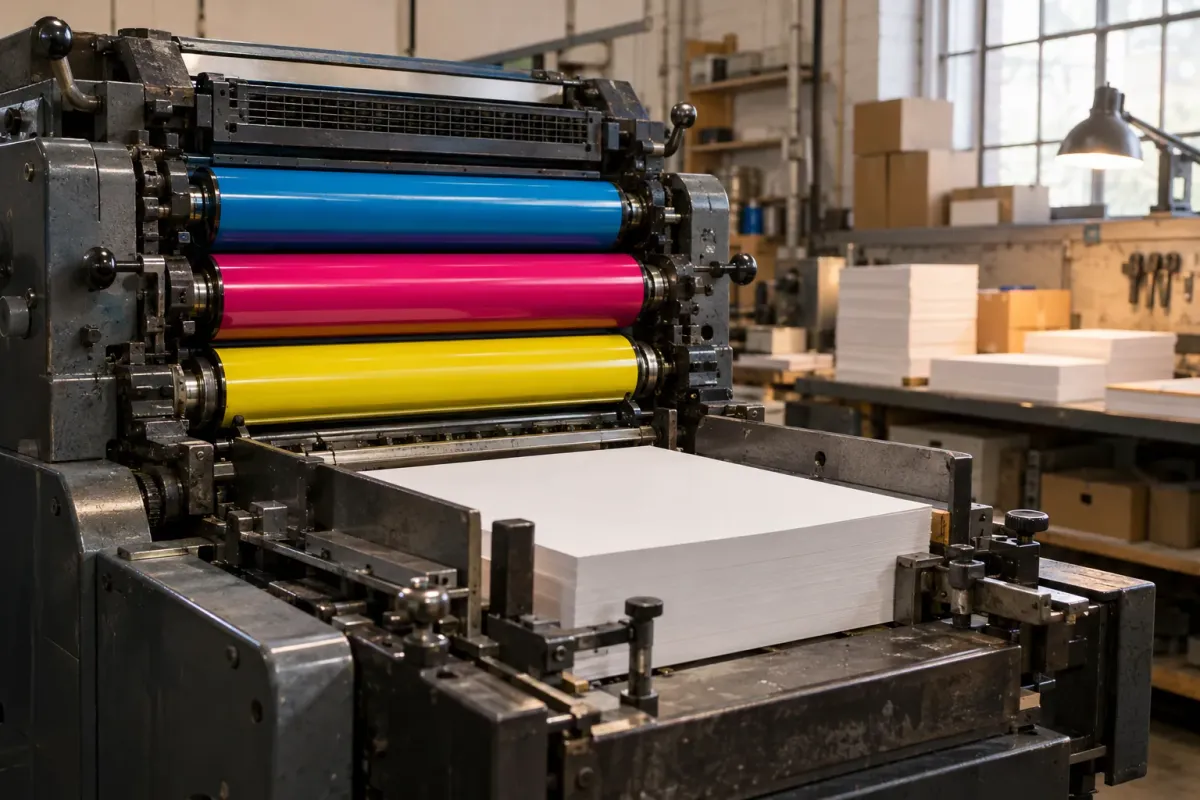
A card’s print run shows up in one of four places. The first is the card itself: a serial-numbered card carries its run as the second figure of a stamp such as 12/99. The second is the maker’s checklist, where Upper Deck gives a run for each numbered version. The third, for Topps cards, is the checklist sites, which give the same figure. The fourth, for serialized Magic cards, can be the maker’s product page, as with Tarkir: Dragonstorm. Most other cards have no published run: Upper Deck gives card rates for some unnumbered cards. A card rate, a short print label and a pop report count are not print runs.
Our guide to how serial-numbered cards work explains the stamp itself.
What does “print run” mean?
Collectors use it for three different things, and only the first is a quantity.
| Meaning | What it tells you | Example |
|---|---|---|
| A stated quantity | How many copies of one exact version exist | A card stamped 01/25 |
| A printing batch | Which pass through the press a copy came from | Pokémon’s 1st Edition stamp, which marked first print runs |
| A graded count | How many copies one grader has graded | CGC’s population report, which is not a run at all |
The batch meaning shows up most on vintage cards. Base Set came in four printings: 1st Edition, Shadowless, Unlimited and a fourth print dated 1999-2000. Magic uses the word for where cards were printed: the first print runs of main sets are now printed in Japan, with exceptions such as Collector Boosters made in the United States, while other copies are printed in North America and Europe. That too is about a batch.
Which makers publish runs, and where?
| Maker or brand | What it publishes | Where to find it |
|---|---|---|
| Upper Deck | A run for each numbered card on its 2025-26 Extended Series checklist; a card rate for some unnumbered ones | Its checklist for the product |
| Topps | Runs for 2026 Series 1 parallels, as checklist sites list them | Two checklist sites that agree |
| Wizards of the Coast | The run of a serialized Mox Jasper card, on one set’s page | The product page for Tarkir: Dragonstorm |
| Secret Lair | A limited print run label, with no number | The Secret Lair help center |
| Pokémon | One company-wide production total | Its company figures page |
| Bandai, One Piece | Card types by rarity, with no quantity per card | Its PRB-01 product page |
A few details from those pages:
- Upper Deck. The Deluxe parallel of card 501 in the 2025-26 Extended Series carries a run of 250, while the Holiday parallel of a Young Guns card carries only a card rate of 1:15 in Holiday packs. A card rate counts how often a card turns up per pack, not how many packs were made, so it cannot be turned into a run.
- Topps. The 2026 Series 1 Gold parallel is numbered to 2,026 copies and the Yellow Holo Foil to 399. Our guide to Topps Series 1 and 2 lists the rest of that set’s runs.
- Wizards of the Coast. Its Tarkir: Dragonstorm page says the set has 500 serialized Mox Jasper cards, printed in English only and sold only in Collector Boosters. It says the unnumbered Mox Jasper cards in the set are mechanically identical.
- Secret Lair. Most drops are a limited print run, meaning they are printed before the sale starts, and some drops are still printed on demand.
- Pokémon. Its company figures page, as of the end of March 2026, gives a total production figure for its cards. That is one running total across every card it has made.
- Bandai. PRB-01 has 111+30 card types and a count for each rarity, and a rarity count is not a print run.
How do you find the run for a card in hand?
- Read the stamp. On a card stamped 12/99, the run is 99. A serial-numbered card is made in a specific quantity with its own number on the card, and a 1/1 is the only copy of that exact card.
- Find the exact row. Match the product, set, card number and parallel on the maker’s checklist. On Upper Deck’s checklist, parallels reuse their base card’s number, so read the parallel’s name as well as the number. Our guide to reading a sports card checklist explains the columns.
- Count printing plates as four. Each card is printed from four plates, in black, cyan, magenta and yellow. Aaron Judge’s 2026 Series 1 base cards have four plates each, one in each color, each a single copy.
- Cross-check checklist sites. When you rely on checklist sites, use a run only if two of them state the same figure. If they differ, read the stamp on the card and leave the dispute alone.
- For a serialized Magic card, read the product page. Wizards’ Tarkir: Dragonstorm page states the run for its Mox Jasper card, so check the set’s page for any serialized card.
What if the card has no number?
Then the run is almost always unpublished. A short print is a base-set card printed in a lesser quantity than the others in its set, with no figure given, and it may carry no stamp at all. What a checklist usually gives instead is a card rate, which says how often a card turns up in packs.
That is the normal case for trading card sets: Pokémon, Magic and One Piece cards each carry a number and a rarity, and our guides to Pokémon rarity symbols and One Piece rarities explain those labels. A rarity is a tier in the set, not a count of copies.
Is a pop report a print run?
No. A pop report counts the copies a grading company has graded, and nothing else. CGC itself says its counts are “not an indicator of value or rarity.” Ungraded copies and copies graded by other companies never appear in it. Our guide to reading a pop report shows how to use one, and the pop report entry gives the short version.
Does the run tell you what a card sells for?
No. A run is a count, and the price comes from what buyers have paid for that exact version. A /25 and a /99 of the same card are separate cards to buyers, so compare sales of the same run only. Our guides to finding what a card sold for and valuing a sports card walk through it, and the serial-numbered and short print entries define the terms.
A quick check before you buy
- Ask the seller for a clear photo of the stamp, front and back.
- Find the card’s row on the maker’s checklist and confirm the run matches the parallel named in the listing.
- If you rely on checklist sites, confirm two of them agree.
- If there is no stamp and no stated run, treat any run quoted in a listing as unconfirmed.
- Do not read a pop count or a card rate as a print run. The sports cards hub links to more of our sports card guides.
Frequently asked questions
How many Pokémon cards have been made?
Over 85 billion as of the end of March 2026, counting every Pokémon card produced.
Which English Pokémon sets had a 1st Edition stamp?
Base Set and the sets of the next 3 years or so, ending with Neo Destiny. Of the 10 sets in that stretch, only Base Set 2, a set of reprints, went without it.
Did Japanese Pokémon cards have 1st Edition stamps?
Yes, from the Pokémon VS set in 2001 until the 20th Anniversary set in 2016. In Japanese sets, 1st Edition copies are often far more common than unlimited ones.
When did Magic cards printed in Japan start to look different?
Around the release of Theros: Beyond Death in January 2020. Japan-printed cards feel smoother and glossier, and their backs usually show a thin white border around the black one.