How to tell a reprint from an original card
How to tell a reprint from the first printing on Pokémon, Magic, One Piece and sports cards, by set mark, number, copyright year, stamp and size.
By the Rip.fan Editorial Team.
Published 7 min read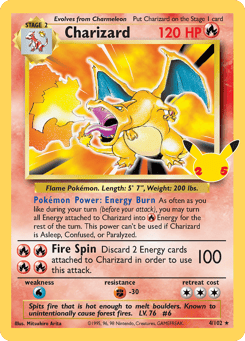
A reprint is told apart from the original by the marks the maker changes, not by the art. Check five things: the set symbol or code, the card number and total, the copyright line, any anniversary stamp, and on old cards the border and the size. A card reprinted in a later set usually carries that set’s mark. A few reprints keep the original number or symbol, and those need the stamp, border or copyright year instead. A reprint made by the maker is still a genuine card. A counterfeit is a card made by someone besides the official company, and CGC does not certify them.
What does “reprint” mean?
Collectors use the word for four different things, and only one of them is a fake.
| What happened | Example | Is it a different card? | The mark that settles it |
|---|---|---|---|
| The maker printed more of the same set | Base Set’s later print runs | Same set and number; sometimes a separate printing | A 1st Edition stamp, a shadow or the copyright year |
| The maker put the card in a later set | Base Set 2 and Legendary Collection | Yes, a card of the later set | The later set’s symbol and number |
| The maker reprinted it under its original number or symbol | Magic’s Chronicles; One Piece’s premium boosters | Yes, though the symbol or number matches | Magic: the border or the copyright line. One Piece: the maker’s card list |
| Someone else printed a copy | A counterfeit | Not a genuine card | See our guides to spotting fakes |
The first row matters for price but not for identity. Pokémon’s support page on product availability, first posted in February 2021, said it was printing more of products in high demand. Cards from a later print run of a set are the same cards. On vintage sets, though, a print run can be a printing in its own right, as Base Set shows below.
How do you tell a Pokémon reprint?
Start with the set mark. Base Set cards carry no set symbol at all, while reprints in Base Set 2 and Legendary Collection show those sets’ own symbols and numbers. Base Set 2 was made of reprints from Base Set and Jungle, and Legendary Collection reprinted cards from Base Set, Jungle, Fossil and Team Rocket. So the number moves too. Here is one card, Charizard, across five printings on Rip.fan’s set pages:
| Set | Year | Number | What marks it |
|---|---|---|---|
| Base | 1999 | 4/102 | No set symbol |
| Base Set 2 | 2000 | 4/130 | A “2” symbol |
| Legendary Collection | 2002 | 3/110 | Its own symbol |
| Evolutions | 2016 | 11/108 | Its own number in a 108-card list |
| 30th Celebration: Classic Collection | 2026 | 4/102 | A new foil treatment |
Evolutions is not a straight reprint. Pokémon’s UK press notice of September 21, 2016 said the set revisited the original cards with the look and feel of Base Set, and showed Pokémon-EX cards in the Base Set frame.
The last row is the trap. In 30th Celebration, classic cards such as Base Set Charizard come back with a new foil treatment, and the Charizard is numbered 4/102, the Base Set number. The 2021 Celebrations reprints carry a 25th Anniversary logo. Our guides to Celebrations and 30th Celebration cover both subsets.
Which Base Set print do you have?
Base Set came in four printings: 1st Edition, Shadowless, Unlimited (which added the drop shadow) and a late fourth print that changed the copyright line to 1999-2000. That later run came out in the UK in 2000 and often looks lighter than earlier ones. The copyright year is the clue for the last one. Our guide to 1st Edition and Shadowless cards walks through the stamp and the shadow, and how to identify a Pokémon card’s set covers symbols and numbers in every era.
How do you tell a Magic reprint?
The expansion symbol, at the middle right below the picture, tells you which set a Magic card is from. The hard cases are sets made of reprints that kept the original symbols, which makes them easy to mistake. The table below lists those sets and their clues by what to read on the card:
| Clue on the card | Reprint set | Earlier sets it reprints, per TCGplayer’s chart |
|---|---|---|
| Copyright line 1993-1999, and no card number below the text box | A reprint set of fifteen earlier sets | Among them Arabian Nights, Ice Age and Urza’s Saga |
| Copyright line 1993-2000 | Starter 2000 | Starter 1999 and Classic Sixth Edition |
| Copyright line 2014 | An anthology set | Four earlier products |
| White border | Chronicles | Arabian Nights, Antiquities, Legends and The Dark |
Watch for altered copies. CGC will not grade a card altered to look like a rarer version, such as one with its white borders turned black or its set symbol changed.
Some old Magic cards will not come back in the same form. Wizards’ reprint policy, dated May 4, 2016, lists reserved cards it promises never to print again in a functionally identical form, and says any card not on the list may be reprinted. No card from Mercadian Masques or later is reserved, and Wizards keeps the right to print special versions such as oversized cards. Our guides to Magic card rarities and spotting fake Magic cards go further.
How do you tell a One Piece reprint?
By the card number. A One Piece card number starts with a product code, such as OP01-006, and the reprints in the PRB-01 premium booster keep their original numbers. 110 of PRB-01’s 111 card numbers come from earlier products: boosters OP-01 to OP-06, starter decks, EB-01 and promotion cards. Only PRB01-001 is new. Many of the reprints are alt-art cards with new illustrations.
The premium booster has 319 entries for those 111 numbers, because one number can have several versions; OP01-006 appears four times. Each entry has its own image, so match your card’s art to an entry before you trust a listing that gives only the number. Our guides to premium boosters and spotting fake One Piece cards cover the versions in more depth.
How do you tell a sports card reprint?
On the best-known vintage case, the clues are size and gaps in the checklist. Collector reference BaseballCardPedia says 1952 Topps cards measure 2 5/8 by 3 3/4 inches. It says Topps issued a standard-size reprint of the set in the early 1980s, sold only as a factory set, and that five people from the original set are missing from it. So a 1952 design in standard size marks the later printing, and so does a checklist with those five gaps. Our guide to trading card sizes gives the standard measurements.
Not every old design is a reprint. 2001 Topps Heritage is not a reprint: it applied the 1952 design to the athletes of that year. Our guide to Topps Heritage explains the brand, and spotting fake sports cards covers copies made by someone else.
Does Yu-Gi-Oh! mark its reprints?
Through the code. TCGplayer explains that a Yu-Gi-Oh! card number holds a set prefix, a one- or two-letter regional abbreviation and the card’s number in the set. Blue-Eyes White Dragon is LOB-001, dated March 8, 2002, and LOB-EN001, dated April 21, 2023, in its 25th Anniversary Edition. The EN letters separate the two printings. Our guide to spotting fake Yu-Gi-Oh! cards covers the other checks.
How to check any card in five steps
- Find the set mark and write it down.
- Write down the full number, with its total, prefix or code.
- Read the copyright year, and look for an anniversary logo or stamp.
- On old cards, check the border color and measure the card.
- Match all of it to one entry in the maker’s list, then price that exact version. For Pokémon cards, Rip.fan’s card price lookup lists the set beside each result, and our guide to researching a card before buying covers the rest.
Frequently asked questions
Which players are missing from the 1952 Topps reprint set?
Five: Billy Loes (20), Dom DiMaggio (22), Saul Rogovin (159), Solly Hemus (196) and Tommy Holmes (289).
Is there a 1st Edition Legendary Collection?
No. Legendary Collection, released on May 24, 2002, was printed in Unlimited only, so a 1st Edition stamp on one of its 110 cards does not match the set. Every card also exists as a reverse holo, the first in English Pokémon.
Can cards be added to or taken off Magic's Reserved List?
No. Under Wizards' reprint policy, no cards will be added to the list in the future and, in consideration of past commitments, none will be removed.
Can a Reserved List card come back as a premium printing?
Not under the policy. An earlier version of Wizards' reprint policy allowed premium versions of reserved cards, and since 2011 the policy has ruled out printing them in either premium or non-premium form.