Sticker vs on-card autographs: how to tell them apart
How sticker and on-card autographs are made, why makers still use labels, how to tell which a card has, and where cut and printed signatures fit in.
By the Rip.fan Editorial Team.
Published 6 min read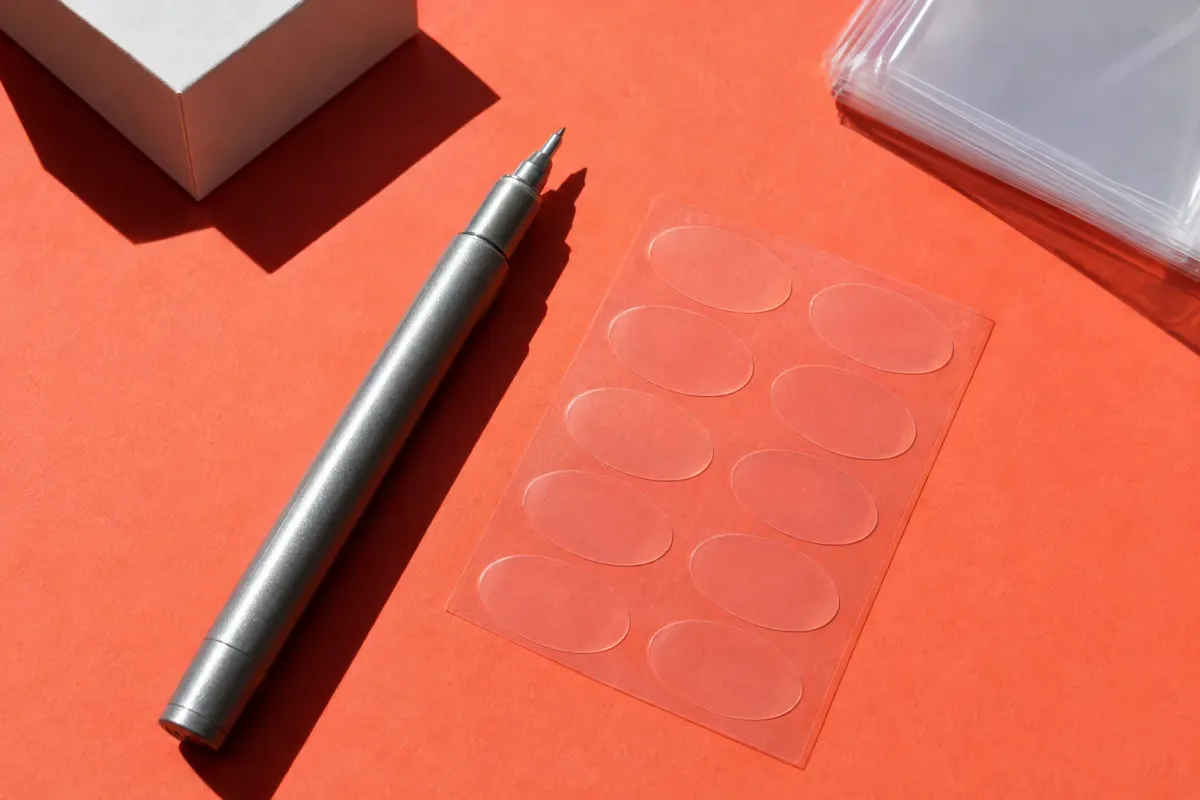
An on-card autograph, also called hard-signed, is signed by the player directly on the card. A sticker autograph is signed on a clear label, and the maker sticks that label onto the card later in production. Both are certified by the maker. Collectors usually prefer on-card signatures, and makers use stickers mainly to have signed cards ready on time.
What is the difference?
Where the ink sits. Upper Deck’s glossaries describe a hard-signed card as one with the signature placed straight onto the card’s surface. A sticker, or label, autograph carries a certified signature on a clear label that is applied to the card’s surface; a 2009 guest glossary in Upper Deck’s New Collector Corner series places that step in post production. CGC’s glossary uses the same split: on-card means the signature is on the card and not on a label, and a sticker autograph is one where the athlete signs a label that the maker then applies.
Both kinds count as certified autographs. A 2009 guest glossary in Upper Deck’s New Collector Corner series defines an autograph card as one signed under the company’s certification rules, and it calls the label signature certified too.
Why do makers use stickers at all?
Time. A hard-signed card has to reach the athlete, be signed and come back before the product is packed. When athletes do not send their cards back in time, Upper Deck uses redemption cards to keep the insert ratios printed on the packaging.
Labels avoid that wait. In a 2011 post, Upper Deck’s customer care team explained that athletes could sign almost a full season’s labels in one sitting, and the company could store the signatures until it needed them. It gave an example: 2010-11 Upper Deck Series One hockey went into packs with all of its autographs live and no redemptions, thanks to labels. In general, stickers let a maker have signed cards ready in time for a release.
Why do collectors prefer on-card?
Because the player touched the card. Hard-signed cards are usually considered more favorable for that reason, and sticker autographs are less desirable than on-card ones. In 2011, Upper Deck said collectors had grown unhappy with labels, and that it was moving away from them on higher-end releases and using them mainly in lower-tier and early-season products. That was the company’s position in 2011, so check the current product page for any set you buy.
Upper Deck still makes the case in its own marketing. Its May 2025 announcement about Rookie Auto Patch cards credited their on-card autographs, low numbering and colorful patches for the high prices those cards typically reach on the secondary market. This guide does not put a figure on the gap.
How can you tell which one a card has?
Start with the maker, then the card.
- Read the product page. It says so when a set is hard-signed. Every Auto parallel of the 2025-26 Credentials Hockey base set is hard-signed, for example, and so is the new debut jersey autograph in 2025-26 Extended Series.
- Do not stop at the checklist. The 2025-26 Extended Series checklist has an Auto column, but it marks only that a card is signed.
- Remember that one product can hold both. Upper Deck’s March 2012 notes on 2011-12 Series Two said its packs held sticker autographs and hard-signed autographs at random, so a product name alone does not settle it.
- Look at the card. Tilt it under a light and look for the edges of a clear label around the signature. A sticker is a label applied to the card, so a sticker autograph sits on that label rather than on the printed surface.
- Ask the seller. A listing should say which kind it is. If it does not, ask for a close, angled photo of the signature.
Where do cut and printed signatures fit?
Stickers and on-card signatures are not the only signed cards. Three more types turn up in listings, and one of them is not an autograph at all.
| Type | How it is made | Did the subject sign this card? | What to check |
|---|---|---|---|
| On-card (hard-signed) | Signed directly on the card’s surface | Yes | No label edges; the product page may say hard-signed |
| Sticker or label | Signed on a clear label the maker applies later | On the label, not the card | Label edges around the signature |
| Cut autograph | A signature cut from another document and set into the card | No, it comes from another item | Cuts are typically used for subjects who cannot or do not sign cards, and most show deceased subjects |
| Buyback autograph | An older card the subject signs later | Yes, after the card was first issued | Upper Deck’s 2011-12 Series Two buybacks came with a hologram on the back and a certificate with a matching hologram |
| Facsimile | Stamped or printed as part of production | No | Not signed by the subject, so a listing should not call it an autograph |
A check is one example source for a cut signature. A cut is a fragment, or a signature cut from a larger document, then mounted in or on the card.
How do graders treat each kind?
CGC sorts signed cards by where the signature came from. It grades cards with manufacturer-certified autographs, the kind that come in packs, and cards with other autographs can be sent with JSA autograph authentication as an option. A card with a manufacturer-certified autograph gets CGC’s standard black label unless you also ask for JSA authentication.
For sports cards with manufacturer-certified autographs, CGC can grade the signature too, and that autograph grade appears on the back of the label. On January 26, 2026, CGC announced that a signed card that came straight from a pack and appears on the set’s checklist would be charged only the standard grading fee, without the extra $5 it used to add. The grading cost calculator lists grading service levels, prices and estimated waits, with the day each price was read.
What to check before you buy
- Confirm the set and card number on the maker’s checklist, and that the card is flagged as signed.
- Find out whether the set is hard-signed from the product page, and look for label edges on the card.
- Match any serial stamp to the run for that card, as our guide to serial-numbered cards explains.
- Compare sales of the same type only, since CGC’s glossary rates stickers as less desirable. Our guide to valuing a sports card sets out the method.
- Treat a printed signature as an unsigned card.
Our guide to checking an autograph card covers certificates, holograms and third-party authentication, and autographs, patches and short prints covers the rest of the inserts. The sports cards hub lists every sports guide.
Frequently asked questions
Which Upper Deck hockey sets are signed on the card?
In 2025-26, every autograph in Upper Deck Ice is hard-signed, and each Tableau box lists 2 encased hard-signed autograph cards.
Which autographs from packs must CGC send to JSA?
Upper Deck buyback autographs without their original UDA certificate, 1994 Upper Deck autographs of Alex Rodriguez, Mickey Mantle and Ken Griffey Jr., and Topps Rookie Premiere autographs from 2000 to 2015, among others. CGC adds JSA authentication and its fee if you leave it off.
What is CGC Signature Series?
A label for cards signed in front of a CGC or JSA representative. An autograph that came in a pack qualifies only with JSA authentication added, and only JSA authentication lets you name a minimum autograph grade for one.